


Page 57 - Read Online
P. 57
Villeda-Hernandez et al. Soft Sci 2024;4:14  https://dx.doi.org/10.20517/ss.2023.52  Page 13 of 35

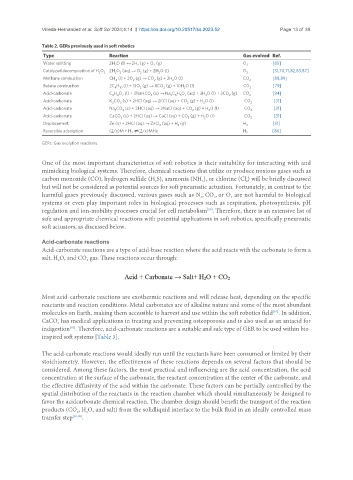
               Table 2. GERs previously used in soft robotics
                Type                  Reaction                                     Gas evolved Ref.
                Water splitting       2H O (l) ↔ 2H  (g) + O  (g)                  O  2      [85]
                                               2
                                        2
                                                     2
                Catalyzed decomposition of H O  2H O  (aq) → O  (g) + 2H O (l)     O         [31,70,71,82,83,87]
                                  2  2  2  2    2      2                            2
                Methane combustion    CH  (l) + 2O  (g) → CO  (g) + 2H O (l)       CO        [88,89]
                                        4     2      2     2                         2
                Butane combustion     2C H  (l) + 13O  (g) → 8CO  (g) + 10H O (l)  CO 2      [79]
                                                2
                                                        2
                                        4
                                                               2
                                         10
                Acid-carbonate        C H O  (l) + 3NaHCO  (s) → Na C H O  (aq) + 3H O (l) + 3CO  (g)  CO  [84]
                                       6  8  7      3      3 6  5  7  2       2      2
                Acid-carbonate        K CO  (s) + 2HCl (aq) → 2KCl (aq) + CO  (g) + H O (l)  CO  [31]
                                       2  3                     2     2              2
                Acid-carbonate        Na CO  (s) + 2HCl (aq) → 2NaCl (aq) + CO  (g) + H O (l)  CO 2  [31]
                                                                  2
                                                                       2
                                          3
                                        2
                Acid-carbonate        CaCO  (s) + 2HCl (aq) → CaCl (aq) + CO  (g) + H O (l)  CO  [31]
                                          3                     2     2              2
                Displacement          Zn (s) + 2HCl (aq) → ZnCl  (aq) + H  (g)     H         [31]
                                                       2     2                      2
                Reversible adsorption  (2/x)M + H      (2/x)MHx                    H 2       [86]
                                             2
               GERs: Gas evolution reactions.
               One of the most important characteristics of soft robotics is their suitability for interacting with and
               mimicking biological systems. Therefore, chemical reactions that utilize or produce noxious gases such as
               carbon monoxide (CO), hydrogen sulfide (H S), ammonia (NH ), or chlorine (Cl ) will be briefly discussed
                                                                                    2
                                                                     3
                                                     2
               but will not be considered as potential sources for soft pneumatic actuation. Fortunately, in contrast to the
               harmful gases previously discussed, various gases such as N , CO , or O  are not harmful to biological
                                                                               2
                                                                     2
                                                                         2
               systems or even play important roles in biological processes such as respiration, photosynthesis, pH
               regulation and ion-mobility processes crucial for cell metabolism . Therefore, there is an extensive list of
                                                                       [90]
               safe and appropriate chemical reactions with potential applications in soft robotics, specifically pneumatic
               soft actuators, as discussed below.
               Acid-carbonate reactions
               Acid-carbonate reactions are a type of acid-base reaction where the acid reacts with the carbonate to form a
               salt, H O, and CO  gas. These reactions occur through:
                     2
                              2
               Most acid-carbonate reactions are exothermic reactions and will release heat, depending on the specific
               reactants and reaction conditions. Metal carbonates are of alkaline nature and some of the most abundant
                                                                                             [91]
               molecules on Earth, making them accessible to harvest and use within the soft robotics field . In addition,
               CaCO  has medical applications in treating and preventing osteoporosis and is also used as an antacid for
                    3
               indigestion . Therefore, acid-carbonate reactions are a suitable and safe type of GER to be used within bio-
                         [92]
               inspired soft systems [Table 3].
               The acid-carbonate reactions would ideally run until the reactants have been consumed or limited by their
               stoichiometry. However, the effectiveness of these reactions depends on several factors that should be
               considered. Among these factors, the most practical and influencing are the acid concentration, the acid
               concentration at the surface of the carbonate, the reactant concentration at the center of the carbonate, and
               the effective diffusivity of the acid within the carbonate. These factors can be partially controlled by the
               spatial distribution of the reactants in the reaction chamber which should simultaneously be designed to
               favor the acidcarbonate chemical reaction. The chamber design should benefit the transport of the reaction
               products (CO , H O, and salt) from the solidliquid interface to the bulk fluid in an ideally controlled mass
                              2
                           2
               transfer step [94,95] .

