


Page 62 - Read Online
P. 62
Page 18 of 35                  Villeda-Hernandez et al. Soft Sci 2024;4:14  https://dx.doi.org/10.20517/ss.2023.52

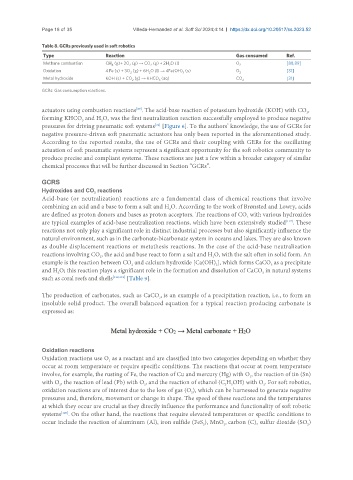
               Table 8. GCRs previously used in soft robotics
                Type                 Reaction                                    Gas consumed     Ref.
                Methane combustion   CH  (g)+ 2O  (g) → CO  (g) + 2H O (l)       O 2              [88,89]
                                       4
                                             2
                                                          2
                                                    2
                Oxidation            4 Fe (s) + 3O  (g) + 6H O (l) → 4Fe(OH)  (s)  O              [31]
                                             2     2           3                  2
                Metal hydroxide      KOH (s) + CO  (g) → KHCO  (aq)              CO               [31]
                                              2        3                           2
               GCRs: Gas consumption reactions.
               actuators using combustion reactions . The acid-base reaction of potassium hydroxide (KOH) with CO ,
                                               [89]
                                                                                                        2
               forming KHCO  and H O, was the first neutralization reaction successfully employed to produce negative
                                   2
                             3
               pressures for driving pneumatic soft systems  [Figure 6]. To the authors’ knowledge, the use of GCRs for
                                                     [31]
               negative pressure-driven soft pneumatic actuators has only been reported in the aforementioned study.
               According to the reported results, the use of GCRs and their coupling with GERs for the oscillating
               actuation of soft pneumatic systems represent a significant opportunity for the soft robotics community to
               produce precise and compliant systems. These reactions are just a few within a broader category of similar
               chemical processes that will be further discussed in Section “GCRs”.

               GCRS
               Hydroxides and CO  reactions
                                 2
               Acid-base (or neutralization) reactions are a fundamental class of chemical reactions that involve
               combining an acid and a base to form a salt and H O. According to the work of Brønsted and Lowry, acids
                                                          2
               are defined as proton donors and bases as proton acceptors. The reactions of CO  with various hydroxides
                                                                                    2
               are typical examples of acid-base neutralization reactions, which have been extensively studied . These
                                                                                                 [117]
               reactions not only play a significant role in distinct industrial processes but also significantly influence the
               natural environment, such as in the carbonate-bicarbonate system in oceans and lakes. They are also known
               as double displacement reactions or metathesis reactions. In the case of the acid-base neutralization
               reactions involving CO , the acid and base react to form a salt and H O, with the salt often in solid form. An
                                                                         2
                                   2
               example is the reaction between CO  and calcium hydroxide [Ca(OH) ], which forms CaCO  as a precipitate
                                                                                            3
                                             2
                                                                          2
               and H O; this reaction plays a significant role in the formation and dissolution of CaCO  in natural systems
                    2
                                                                                         3
               such as coral reefs and shells [118,119]  [Table 9].
               The production of carbonates, such as CaCO , is an example of a precipitation reaction, i.e., to form an
                                                       3
               insoluble solid product. The overall balanced equation for a typical reaction producing carbonate is
               expressed as:


               Oxidation reactions
               Oxidation reactions use O  as a reactant and are classified into two categories depending on whether they
                                      2
               occur at room temperature or require specific conditions. The reactions that occur at room temperature
               involve, for example, the rusting of Fe, the reaction of Cu and mercury (Hg) with O , the reaction of tin (Sn)
                                                                                     2
               with O , the reaction of lead (Pb) with O , and the reaction of ethanol (C H OH) with O . For soft robotics,
                                                                             2
                                                                                          2
                                                                               5
                                                  2
                     2
               oxidation reactions are of interest due to the loss of gas (O ), which can be harnessed to generate negative
                                                                 2
               pressures and, therefore, movement or change in shape. The speed of these reactions and the temperatures
               at which they occur are crucial as they directly influence the performance and functionality of soft robotic
               systems . On the other hand, the reactions that require elevated temperatures or specific conditions to
                      [120]
               occur include the reaction of aluminum (Al), iron sulfide (FeS ), MnO , carbon (C), sulfur dioxide (SO )
                                                                                                         2
                                                                            2
                                                                     2

