


Page 22 - Read Online
P. 22
Page 6 of 16                            Hong et al. Soft Sci 2023;3:29  https://dx.doi.org/10.20517/ss.2023.20


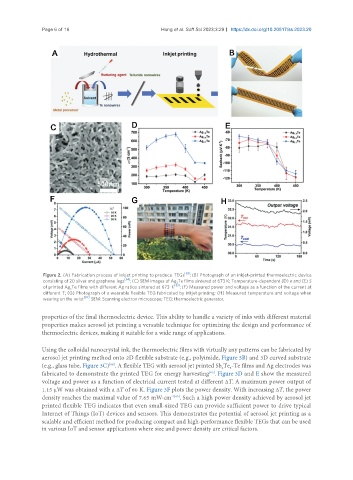
                Figure 2. (A) Fabrication process of inkjet printing to produce  TEGs [83] ; (B) Photograph of an inkjet-printed thermoelectric device
                consisting of 20 silver and graphene legs [84] ; (C) SEM images of Ag Te films sintered at 673 K; Temperature-dependent (D) σ and (E) S
                                                            2
                of printed Ag Te films with different Ag ratios sintered at 673  K [83] ; (F) Measured power and voltage as a function of the current at
                         x
                different T; (G) Photograph of a wearable flexible TEG fabricated by inkjet printing; (H) Measured temperature and voltage when
                wearing on the wrist [83] . SEM: Scanning electron microscope; TEG: thermoelectric generator.
               properties of the final thermoelectric device. This ability to handle a variety of inks with different material
               properties makes aerosol jet printing a versatile technique for optimizing the design and performance of
               thermoelectric devices, making it suitable for a wide range of applications.


               Using the colloidal nanocrystal ink, the thermoelectric films with virtually any patterns can be fabricated by
               aerosol jet printing method onto 2D flexible substrate (e.g., polyimide, Figure 3B) and 3D curved substrate
               (e.g., glass tube, Figure 3C) . A flexible TEG with aerosol jet printed Sb Te -Te films and Ag electrodes was
                                      [88]
                                                                            2
                                                                              3
               fabricated to demonstrate the printed TEG for energy harvesting . Figure 3D and E show the measured
                                                                        [63]
               voltage and power as a function of electrical current tested at different ΔT. A maximum power output of
               1.15 µW was obtained with a ΔT of 60 K. Figure 3F plots the power density. With increasing ΔT, the power
               density reaches the maximal value of 7.65 mW·cm -2[63] . Such a high power density achieved by aerosol jet
               printed flexible TEG indicates that even small-sized TEG can provide sufficient power to drive typical
               Internet of Things (IoT) devices and sensors. This demonstrates the potential of aerosol jet printing as a
               scalable and efficient method for producing compact and high-performance flexible TEGs that can be used
               in various IoT and sensor applications where size and power density are critical factors.

