


Page 20 - Read Online
P. 20
Page 4 of 16                            Hong et al. Soft Sci 2023;3:29  https://dx.doi.org/10.20517/ss.2023.20


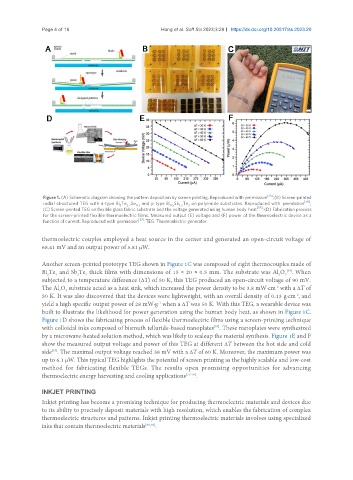
                Figure 1. (A) Schematic diagram showing the pattern deposition by screen printing. Reproduced with permission [75] ; (B) Screen-printed
                radial structured TEG with n-type Bi Te Se  and p-type Bi Sb Te  on polyimide substrates. Reproduced with  permission [76] ;
                                               0.3
                                            2.7
                                         2
                                                                3
                                                             1.5
                                                          0.5
                (C) Screen-printed TEG on flexible glass fabric substrate and the voltage generated using human body heat [54] ; (D) Fabrication process
                for the screen-printed flexible thermoelectric films. Measured output (E) voltage and (F) power of the thermoelectric device as a
                function of current. Reproduced with permission [57] . TEG: Thermoelectric generator.
               thermoelectric couples employed a heat source in the center and generated an open-circuit voltage of
               68.41 mV and an output power of 5.81 µW.
               Another screen-printed prototype TEG shown in Figure 1C was composed of eight thermocouples made of
               Bi Te  and Sb Te  thick films with dimensions of 15 × 20 × 0.5 mm. The substrate was Al O . When
                                                                                                  [54]
                           2
                              3
                 2
                    3
                                                                                               2
                                                                                                 3
               subjected to a temperature difference (ΔT) of 50 K, this TEG produced an open-circuit voltage of 90 mV.
               The Al O  substrate acted as a heat sink, which increased the power density to be 3.8 mW·cm  with a ΔT of
                                                                                              -2
                     2
                       3
               50 K. It was also discovered that the devices were lightweight, with an overall density of 0.13 g·cm , and
                                                                                                     -2
               yield a high specific output power of 28 mW·g  when a ΔT was 50 K. With this TEG, a wearable device was
                                                      -1
               built to illustrate the likelihood for power generation using the human body heat, as shown in Figure 1C.
               Figure 1D shows the fabricating process of flexible thermoelectric films using a screen-printing technique
               with colloidal inks composed of bismuth telluride-based nanoplates . These nanoplates were synthesized
                                                                         [57]
               by a microwave-heated solution method, which was likely to scaleup the material synthesis. Figure 1E and F
               show the measured output voltage and power of this TEG at different ΔT between the hot side and cold
                  [57]
               side . The maximal output voltage reached 38 mV with a ΔT of 60 K. Moreover, the maximum power was
               up to 6.1 μW. This typical TEG highlights the potential of screen printing as the highly scalable and low-cost
               method  for  fabricating  flexible  TEGs.  The  results  open  promising  opportunities  for  advancing
               thermoelectric energy harvesting and cooling applications [77-79] .
               INKJET PRINTING
               Inkjet printing has become a promising technique for producing thermoelectric materials and devices due
               to its ability to precisely deposit materials with high resolution, which enables the fabrication of complex
               thermoelectric structures and patterns. Inkjet printing thermoelectric materials involves using specialized
                                                    ,
               inks that contain thermoelectric materials [80 82] .

