


Page 21 - Read Online
P. 21
Hong et al. Soft Sci 2023;3:29  https://dx.doi.org/10.20517/ss.2023.20            Page 5 of 16


                                                                                                   [83]
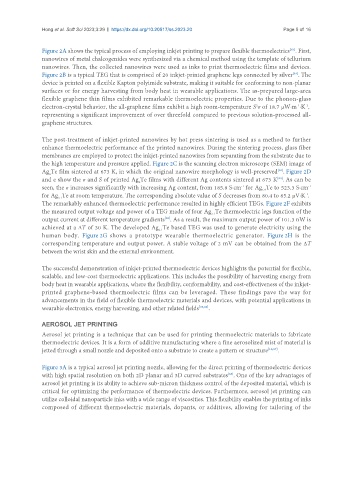
               Figure 2A shows the typical process of employing inkjet printing to prepare flexible thermoelectrics . First,
               nanowires of metal chalcogenides were synthesized via a chemical method using the template of tellurium
               nanowires. Then, the collected nanowires were used as inks to print thermoelectric films and devices.
               Figure 2B is a typical TEG that is comprised of 20 inkjet-printed graphene legs connected by silver . The
                                                                                                    [84]
               device is printed on a flexible Kapton polyimide substrate, making it suitable for conforming to non-planar
               surfaces or for energy harvesting from body heat in wearable applications. The as-prepared large-area
               flexible graphene thin films exhibited remarkable thermoelectric properties. Due to the phonon-glass
               electron-crystal behavior, the all-graphene films exhibit a high room-temperature S σ of 18.7 µW·m ·K ,
                                                                                       2
                                                                                                        -2
                                                                                                     -1
               representing a significant improvement of over threefold compared to previous solution-processed all-
               graphene structures.
               The post-treatment of inkjet-printed nanowires by hot press sintering is used as a method to further
               enhance thermoelectric performance of the printed nanowires. During the sintering process, glass fiber
               membranes are employed to protect the inkjet-printed nanowires from separating from the substrate due to
               the high temperature and pressure applied. Figure 2C is the scanning electron microscope (SEM) image of
               Ag Te film sintered at 673 K, in which the original nanowire morphology is well-preserved . Figure 2D
                                                                                               [83]
                  x
               and e show the σ and S of printed Ag Te films with different Ag contents sintered at 673 K . As can be
                                                                                              [83]
                                                x
               seen, the σ increases significantly with increasing Ag content, from 185.8 S·cm  for Ag Te to 523.3 S·cm
                                                                                  -1
                                                                                                         -1
                                                                                         1.9
                                                                                                        -1
               for Ag Te at room temperature. The corresponding absolute value of S decreases from 80.4 to 65.2 µV·K .
                     2.1
               The remarkably enhanced thermoelectric performance resulted in highly efficient TEGs. Figure 2F exhibits
               the measured output voltage and power of a TEG made of four Ag Te thermoelectric legs function of the
                                                                        2.1
                                                         [83]
               output current at different temperature gradients . As a result, the maximum output power of 101.3 nW is
               achieved at a ΔT of 30 K. The developed Ag Te based TEG was used to generate electricity using the
                                                       2.1
               human  body.  Figure 2G  shows  a  prototype  wearable  thermoelectric  generator.  Figure 2H  is  the
               corresponding temperature and output power. A stable voltage of 2 mV can be obtained from the ΔT
               between the wrist skin and the external environment.
               The successful demonstration of inkjet-printed thermoelectric devices highlights the potential for flexible,
               scalable, and low-cost thermoelectric applications. This includes the possibility of harvesting energy from
               body heat in wearable applications, where the flexibility, conformability, and cost-effectiveness of the inkjet-
               printed graphene-based thermoelectric films can be leveraged. These findings pave the way for
               advancements in the field of flexible thermoelectric materials and devices, with potential applications in
               wearable electronics, energy harvesting, and other related fields [85,86] .


               AEROSOL JET PRINTING
               Aerosol jet printing is a technique that can be used for printing thermoelectric materials to fabricate
               thermoelectric devices. It is a form of additive manufacturing where a fine aerosolized mist of material is
               jetted through a small nozzle and deposited onto a substrate to create a pattern or structure [18,87] .

               Figure 3A is a typical aerosol jet printing nozzle, allowing for the direct printing of thermoelectric devices
                                                                              [88]
               with high spatial resolution on both 2D planar and 3D curved substrates . One of the key advantages of
               aerosol jet printing is its ability to achieve sub-micron thickness control of the deposited material, which is
               critical for optimizing the performance of thermoelectric devices. Furthermore, aerosol jet printing can
               utilize colloidal nanoparticle inks with a wide range of viscosities. This flexibility enables the printing of inks
               composed of different thermoelectric materials, dopants, or additives, allowing for tailoring of the

