


Page 69 - Read Online
P. 69
Han et al. Carbon Footprints 2025, 4, 25  https://dx.doi.org/10.20517/cf.2025.18  Page 11 of 20


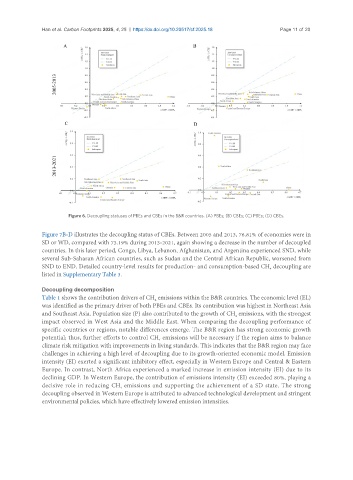
                        Figure 6. Decoupling statuses of PBEs and CBEs in the B&R countries. (A) PBEs; (B) CBEs; (C) PBEs; (D) CBEs.

               Figure 7B-D illustrates the decoupling status of CBEs. Between 2005 and 2013, 76.81% of economies were in
               SD or WD, compared with 73.19% during 2013-2021, again showing a decrease in the number of decoupled
               countries. In this later period, Congo, Libya, Lebanon, Afghanistan, and Argentina experienced SND, while
               several Sub-Saharan African countries, such as Sudan and the Central African Republic, worsened from
               SND to END. Detailed country-level results for production- and consumption-based CH  decoupling are
                                                                                            4
               listed in Supplementary Table 3.

               Decoupling decomposition
               Table 1 shows the contribution drivers of CH  emissions within the B&R countries. The economic level (EL)
                                                     4
               was identified as the primary driver of both PBEs and CBEs. Its contribution was highest in Northeast Asia
               and Southeast Asia. Population size (P) also contributed to the growth of CH  emissions, with the strongest
                                                                                4
               impact observed in West Asia and the Middle East. When comparing the decoupling performance of
               specific countries or regions, notable differences emerge. The B&R region has strong economic growth
               potential; thus, further efforts to control CH  emissions will be necessary if the region aims to balance
                                                       4
               climate risk mitigation with improvements in living standards. This indicates that the B&R region may face
               challenges in achieving a high level of decoupling due to its growth-oriented economic model. Emission
               intensity (EI) exerted a significant inhibitory effect, especially in Western Europe and Central & Eastern
               Europe. In contrast, North Africa experienced a marked increase in emission intensity (EI) due to its
               declining GDP. In Western Europe, the contribution of emissions intensity (EI) exceeded 80%, playing a
               decisive role in reducing CH  emissions and supporting the achievement of a SD state. The strong
                                          4
               decoupling observed in Western Europe is attributed to advanced technological development and stringent
               environmental policies, which have effectively lowered emission intensities.

