


Page 19 - Read Online
P. 19
Page 16 of 39                          Yang et al. Soft Sci. 2025, 5, 46  https://dx.doi.org/10.20517/ss.2025.44


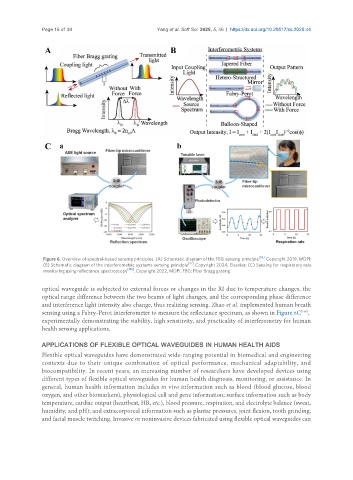
                Figure 6. Overview of spectral-based sensing principles. (A) Schematic diagram of the FBG sensing principle [55] . Copyright 2019, MDPI;
                (B) Schematic diagram of the interferometric systems sensing  principle [37] . Copyright 2024, Elsevier; (C) Sensing for respiratory rate
                monitoring using reflectance spectroscopy [146] . Copyright 2022, MDPI. FBG: Fiber Bragg grating.

               optical waveguide is subjected to external forces or changes in the RI due to temperature changes, the
               optical range difference between the two beams of light changes, and the corresponding phase difference
               and interference light intensity also change, thus realizing sensing. Zhao et al. implemented human breath
                                                                                                      [146]
               sensing using a Fabry–Perot interferometer to measure the reflectance spectrum, as shown in Figure 6C ,
               experimentally demonstrating the stability, high sensitivity, and practicality of interferometry for human
               health sensing applications.


               APPLICATIONS OF FLEXIBLE OPTICAL WAVEGUIDES IN HUMAN HEALTH AIDS
               Flexible optical waveguides have demonstrated wide-ranging potential in biomedical and engineering
               contexts due to their unique combination of optical performance, mechanical adaptability, and
               biocompatibility. In recent years, an increasing number of researchers have developed devices using
               different types of flexible optical waveguides for human health diagnosis, monitoring, or assistance. In
               general, human health information includes in vivo information such as blood (blood glucose, blood
               oxygen, and other biomarkers), physiological cell and gene information; surface information such as body
               temperature, cardiac output (heartbeat, HR, etc.), blood pressure, respiration, and electrolyte balance (sweat,
               humidity, and pH); and extracorporeal information such as plantar pressures, joint flexion, tooth grinding,
               and facial muscle twitching. Invasive or noninvasive devices fabricated using flexible optical waveguides can

