


Page 14 - Read Online
P. 14
Yang et al. Soft Sci. 2025, 5, 46  https://dx.doi.org/10.20517/ss.2025.44       Page 11 of 39


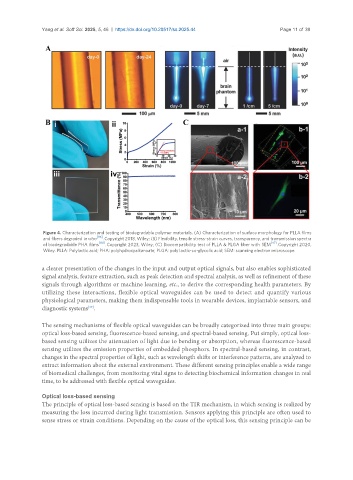
                Figure 4. Characterization and testing of biodegradable polymer materials. (A) Characterization of surface morphology for PLLA films
                                  [116]
                and fibers degraded in vitro  . Copyright 2018, Wiley; (B) Flexibility, tensile stress-strain curves, transparency, and transmission spectra
                                  [118]                                                     [47]
                of biodegradable PHA  films  . Copyright 2023, Wiley; (C) Biocompatibility test of PLLA & PLGA fiber with  SEM  . Copyright 2020,
                Wiley. PLLA: Polylactic acid; PHA: polyhydroxyalkanoate; PLGA: poly lactic-co-glycolic acid; SEM: scanning electron microscope.
               a clearer presentation of the changes in the input and output optical signals, but also enables sophisticated
               signal analysis, feature extraction, such as peak detection and spectral analysis, as well as refinement of these
               signals through algorithms or machine learning, etc., to derive the corresponding health parameters. By
               utilizing these interactions, flexible optical waveguides can be used to detect and quantify various
               physiological parameters, making them indispensable tools in wearable devices, implantable sensors, and
               diagnostic systems .
                               [37]

               The sensing mechanisms of flexible optical waveguides can be broadly categorized into three main groups:
               optical loss-based sensing, fluorescence-based sensing, and spectral-based sensing. Put simply, optical loss-
               based sensing utilizes the attenuation of light due to bending or absorption, whereas fluorescence-based
               sensing utilizes the emission properties of embedded phosphors. In spectral-based sensing, in contrast,
               changes in the spectral properties of light, such as wavelength shifts or interference patterns, are analyzed to
               extract information about the external environment. These different sensing principles enable a wide range
               of biomedical challenges, from monitoring vital signs to detecting biochemical information changes in real
               time, to be addressed with flexible optical waveguides.


               Optical loss-based sensing
               The principle of optical loss-based sensing is based on the TIR mechanism, in which sensing is realized by
               measuring the loss incurred during light transmission. Sensors applying this principle are often used to
               sense stress or strain conditions. Depending on the cause of the optical loss, this sensing principle can be

