


Page 96 - Read Online
P. 96
Zhou et al. Soft Sci. 2026, 6, 10                                                 Page 33 of 47


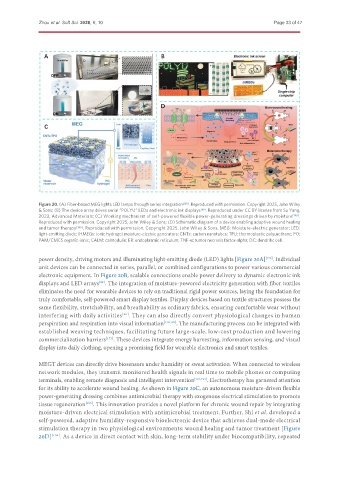
               Figure 20. (A) Fiber-based MEG lights LED lamps through series integration [129] . Reproduced with permission. Copyright 2025, John Wiley
               & Sons; (B) The device array drives serial “POLYU” LEDs and electronic ink displays [88] . Reproduced under CC BY license from Su Yang,
               2022, Advanced Materials; (C) Working mechanism of self-powered flexible power-generating dressings driven by moisture [195] .
               Reproduced with permission. Copyright 2025, John Wiley & Sons; (D) Schematic diagram of a device enabling adaptive wound healing
               and tumor therapy [196] . Reproduced with permission. Copyright 2025, John Wiley & Sons. MEG: Moisture-electric generator; LED:
               light-emitting diode; IHMEGs: ionic hydrogel moisture-electric generators; CNTs: carbon nanotubes; TPU: thermoplastic polyurethane; PO:
               PAM/CMCS organic-ionic; CALM: calmodulin; ER: endoplasmic reticulum; TNF-α: tumor necrosis factor-alpha; DC: dendritic cell.


               power density, driving motors and illuminating light-emitting diode (LED) lights [Figure 20A] . Individual
                                                                                              [129]
               unit devices can be connected in series, parallel, or combined configurations to power various commercial
               electronic equipment. In Figure 20B, scalable connections enable power delivery to dynamic electronic ink
               displays and LED arrays . The integration of moisture-powered electricity generation with fiber textiles
                                    [88]
               eliminates the need for wearable devices to rely on traditional rigid power sources, laying the foundation for
               truly comfortable, self-powered smart display textiles. Display devices based on textile structures possess the
               same flexibility, stretchability, and breathability as ordinary fabrics, ensuring comfortable wear without
               interfering with daily activities . They can also directly convert physiological changes in human
                                            [90]
               perspiration and respiration into visual information [128,192] . The manufacturing process can be integrated with
               established weaving techniques, facilitating future large-scale, low-cost production and lowering
               commercialization barriers [171] . These devices integrate energy harvesting, information sensing, and visual
               display into daily clothing, opening a promising field for wearable electronics and smart textiles.


               MEGT devices can directly drive biosensors under humidity or sweat activation. When connected to wireless
               network modules, they transmit monitored health signals in real time to mobile phones or computing
               terminals, enabling remote diagnosis and intelligent intervention [193,194] . Electrotherapy has garnered attention
               for its ability to accelerate wound healing. As shown in Figure 20C, an autonomous moisture-driven flexible
               power-generating dressing combines antimicrobial therapy with exogenous electrical stimulation to promote
               tissue regeneration [195] . This innovation provides a novel platform for chronic wound repair by integrating
               moisture-driven electrical stimulation with antimicrobial treatment. Further, Shi et al. developed a
               self-powered, adaptive humidity-responsive bioelectronic device that achieves dual-mode electrical
               stimulation therapy in two physiological environments: wound healing and tumor treatment [Figure
               20D] [196] . As a device in direct contact with skin, long-term stability under biocompatibility, repeated

