


Page 87 - Read Online
P. 87
Page 24 of 47                                                         Zhou et al. Soft Sci. 2026, 6, 10


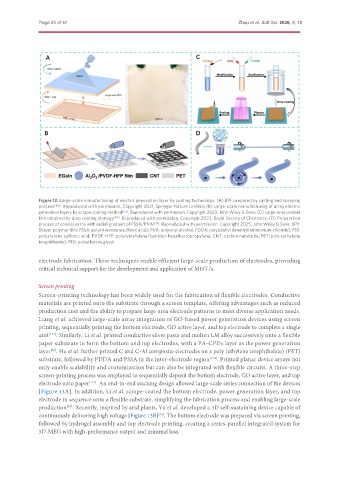
               Figure 12. Large-scale manufacturing of electric generation layer by coating technology. (A) BPF prepared by casting and spraying
               process  [105] . Reproduced with permission. Copyright 2021, Springer Nature Limited; (B) Large-scale manufacturing of array electric
               generation layers by scrape coating method [172] . Reproduced with permission. Copyright 2023, John Wiley & Sons; (C) Large-area protein
               film obtained by drop coating strategy [40] . Reproduced with permission. Copyright 2023, Royal Society of Chemistry; (D) Preparation
               process of coaxial yarns with radial gradient of PSSA/PVA [129] . Reproduced with permission. Copyright 2025, John Wiley & Sons. BPF:
               Bilayer polymer film; PSSA: poly(4-benzenesulfonic acid); PVA: polyvinyl alcohol; PDDA: poly(diallyl dimethyl ammonium chloride); PSS:
               polystyrene sulfonic acid; PVDF-HFP: poly(vinylidene fluoride)-hexafluoropropylene; CNT: carbon nanotube; PET: poly (ethylene
               terephthalate); PEG: polyethylene glycol.


               electrode fabrication. These techniques enable efficient large-scale production of electrodes, providing
               critical technical support for the development and application of MEGTs.


               Screen printing
               Screen-printing technology has been widely used for the fabrication of flexible electrodes. Conductive
               materials are printed onto the substrate through a screen template, offering advantages such as reduced
               production cost and the ability to prepare large-area electrode patterns to meet diverse application needs.
               Liang et al. achieved large-scale array integration of GO-based power generation devices using screen
               printing, sequentially printing the bottom electrode, GO active layer, and top electrode to complete a single
               unit [173] . Similarly, Li et al. printed conductive silver paste and molten LM alloy successively onto a flexible
               paper substrate to form the bottom and top electrodes, with a PA-CPDs layer as the power generation
               layer . He et al. further printed C and C-Al composite electrodes on a poly (ethylene terephthalate) (PET)
                   [43]
               substrate, followed by PDDA and PSSA in the inter-electrode region [174] . Printed planar device arrays not
               only enable scalability and customization but can also be integrated with flexible circuits. A three-step
               screen-printing process was employed to sequentially deposit the bottom electrode, GO active layer, and top
               electrode onto paper . An end-to-end stacking design allowed large-scale series connection of the devices
                                [173]
               [Figure 13A]. In addition, Li et al. scrape-coated the bottom electrode, power generation layer, and top
               electrode in sequence onto a flexible substrate, simplifying the fabrication process and enabling large-scale
               production . Recently, inspired by arid plants, Yu et al. developed a 3D self-sustaining device capable of
                        [47]
               continuously delivering high voltage [Figure 13B] . The bottom electrode was prepared via screen printing,
                                                         [34]
               followed by hydrogel assembly and top electrode printing, creating a series-parallel integrated system for
               3D-MEG with high-performance output and minimal loss.

