


Page 83 - Read Online
P. 83
Page 20 of 47                                                         Zhou et al. Soft Sci. 2026, 6, 10


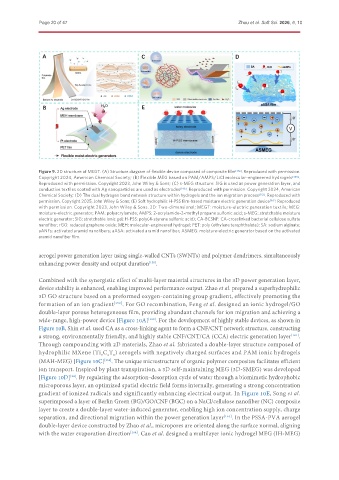
               Figure 9. 2D structure of MEGT. (A) Structure diagram of flexible device composed of composite film [142] . Reproduced with permission.
               Copyright 2024, American Chemical Society; (B) Flexible MEG based on PAM/AMPS/LiCl molecular-engineered hydrogels [148] .
               Reproduced with permission. Copyright 2023, John Wiley & Sons; (C) s-MEG structure: SIG is used as power generation layer, and
               conductive textiles coated with Ag nanoparticles are used as electrodes  [149] . Reproduced with permission. Copyright 2024, American
               Chemical Society; (D) The dual hydrogen bond network structure within hydrogels and the ion migration process [152] . Reproduced with
               permission. Copyright 2025, John Wiley & Sons; (E) Soft hydrophilic H-PSS film-based moisture electric generation device [153] . Reproduced
               with permission. Copyright 2023, John Wiley & Sons. 2D: Two-dimensional; MEGT: moisture-electric generation textile; MEG:
               moisture-electric generator; PAM: polyacrylamide; AMPS: 2-acrylamide-2-methyl propane sulfonic acid; s-MEG: stretchable moisture
               electric generator; SIG: stretchable ionic gel; H-PSS: poly(4-styrene sulfonic acid); CA-BCSNF: CA-crosslinked bacterial cellulose sulfate
               nanofiber; rGO: reduced graphene oxide; MEH: molecular-engineered hydrogel; PET: poly (ethylene terephthalate); SA: sodium alginate;
               aANFs: activated aramid nanofibers; aASA: activated aramid nanofiber; ASMEG: moisture-electric generator based on the activated
               aramid nanofiber film.


               aerogel power generation layer using single-walled CNTs (SWNTs) and polymer dendrimers, simultaneously
               enhancing power density and output duration .
                                                     [158]
               Combined with the synergistic effect of multi-layer material structures in the 3D power generation layer,
               device stability is enhanced, enabling improved performance output. Zhao et al. prepared a superhydrophilic
               3D GO structure based on a preformed oxygen-containing group gradient, effectively promoting the
               formation of an ion gradient [159] . For GO recombination, Feng et al. designed an ionic hydrogel/GO
               double-layer porous heterogeneous film, providing abundant channels for ion migration and achieving a
               wide-range, high-power device [Figure 10A] [160] . For the development of highly stable devices, as shown in
               Figure 10B, Shin et al. used CA as a cross-linking agent to form a CNF/CNT network structure, constructing
               a strong, environmentally friendly, and highly stable CNF/CNT/CA (CCA) electric generation layer [161] .
               Through compounding with 2D materials, Zhao et al. fabricated a double-layer structure composed of
               hydrophilic MXene (Ti C T ) aerogels with negatively charged surfaces and PAM ionic hydrogels
                                     3
                                         x
                                       2
               (MAH-MEG) [Figure 10C] . The unique microstructure of organic polymer composites facilitates efficient
                                      [162]
               ion transport. Inspired by plant transpiration, a 3D self-maintaining MEG (3D-SMEG) was developed
               [Figure 10D] . By regulating the adsorption–desorption cycle of water through a biomimetic hydrophobic
                          [34]
               microporous layer, an optimized spatial electric field forms internally, generating a strong concentration
               gradient of ionized radicals and significantly enhancing electrical output. In Figure 10E, Song et al.
               superimposed a layer of Berlin Green (BG)/GO/CNF (BGC) on a NaCl/cellulose nanofiber (NC) composite
               layer to create a double-layer water-induced generator, enabling high ion concentration supply, charge
               separation, and directional migration within the power generation layer [163] . In the PSSA-PVA aerogel
               double-layer device constructed by Zhao et al., micropores are oriented along the surface normal, aligning
               with the water evaporation direction [164] . Cao et al. designed a multilayer ionic hydrogel MEG (IH-MEG)

