


Page 79 - Read Online
P. 79
Page 16 of 47                                                         Zhou et al. Soft Sci. 2026, 6, 10


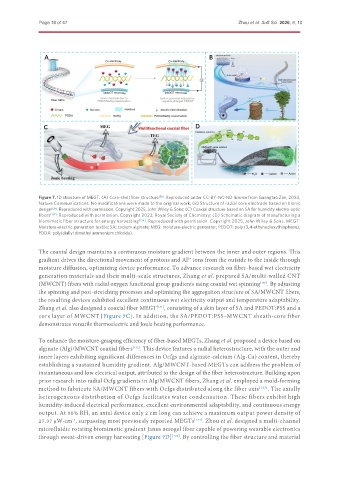
               Figure 7. 1D structure of MEGT. (A) Core-shell fiber structure [50] . Reproduced under CC-BY-NC-ND license from Guangtao Zan, 2024,
               Nature Communications. No modifications were made to the original work; (B) Structure of radial core electrode based on bionic
               design [129] . Reproduced with permission. Copyright 2025, John Wiley & Sons; (C) Coaxial structure based on SA for humidity electro-optic
               fibers [131] . Reproduced with permission. Copyright 2023, Royal Society of Chemistry; (D) Schematic diagram of manufacturing a
               biomimetic fiber structure for energy harvesting [134] . Reproduced with permission. Copyright 2025, John Wiley & Sons. MEGT:
               Moisture-electric generation textile; SA: sodium alginate; MEG: moisture-electric generator; PEDOT: poly (3,4-ethynedioxythiophene);
               PDDA: poly(diallyl dimethyl ammonium chloride).


               The coaxial design maintains a continuous moisture gradient between the inner and outer regions. This
               gradient drives the directional movement of protons and Al  ions from the outside to the inside through
                                                                   3+
               moisture diffusion, optimizing device performance. To advance research on fiber-based wet electricity
               generation materials and their multi-scale structures, Zhang et al. prepared SA/multi-walled CNT
               (MWCNT) fibers with radial oxygen functional group gradients using coaxial wet spinning . By adjusting
                                                                                            [130]
               the spinning and post-stretching processes and optimizing the aggregation structure of SA/MWCNT fibers,
               the resulting devices exhibited excellent continuous wet electricity output and temperature adaptability.
               Zhang et al. also designed a coaxial fiber MEGT [131] , consisting of a skin layer of SA and PEDOT:PSS and a
               core layer of MWCNT [Figure 7C]. In addition, the SA/PEDOT:PSS–MWCNT sheath-core fiber
               demonstrates versatile thermoelectric and Joule heating performance.


               To enhance the moisture-grasping efficiency of fiber-based MEGTs, Zhang et al. proposed a device based on
               alginate (Alg)/MWCNT coaxial fibers [132] . This device features a radial heterostructure, with the outer and
               inner layers exhibiting significant differences in Ocfgs and alginate-calcium (Alg-Ca) content, thereby
               establishing a sustained humidity gradient. Alg/MWCNT-based MEGTs can address the problem of
               instantaneous and low electrical output, attributed to the design of the fiber heterostructure. Building upon
               prior research into radial Ocfg gradients in Alg/MWCNT fibers, Zhang et al. employed a mold-forming
               method to fabricate SA/MWCNT fibers with Ocfgs distributed along the fiber axis [133] . The axially
               heterogeneous distribution of Ocfgs facilitates water condensation. These fibers exhibit high
               humidity-induced electrical performance, excellent environmental adaptability, and continuous energy
               output. At 90% RH, an axial device only 2 cm long can achieve a maximum output power density of
               27.37 μW·cm , surpassing most previously reported MEGTs [133] . Zhou et al. designed a multi-channel
                          -2
               microfluidic rotating biomimetic gradient Janus aerogel fiber capable of powering wearable electronics
               through sweat-driven energy harvesting [Figure 7D] [134] . By controlling the fiber structure and material

