


Page 77 - Read Online
P. 77
Page 14 of 47                                                         Zhou et al. Soft Sci. 2026, 6, 10


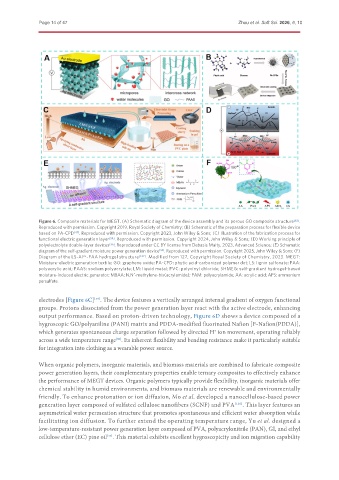
               Figure 6. Composite materials for MEGT. (A) Schematic diagram of the device assembly and its porous GO composite structure [82] .
               Reproduced with permission. Copyright 2019, Royal Society of Chemistry; (B) Schematic of the preparation process for flexible device
               based on PA-CPD [47] . Reproduced with permission. Copyright 2023, John Wiley & Sons; (C) Illustration of the fabrication process for
               functional electric generation layer [59] . Reproduced with permission. Copyright 2024, John Wiley & Sons; (D) Working principle of
               polyelectrolyte double-layer devices [36] . Reproduced under CC BY license from Debasis Maity, 2023, Advanced Science; (E) Schematic
               diagram of the self-gradient moisture power generation device [35] . Reproduced with permission. Copyright 2025, John Wiley & Sons; (F)
               Diagram of the LS-Al -PAA hydrogel structure [127] . Modified from 127, Copyright Royal Society of Chemistry, 2023. MEGT:
                              3+
               Moisture-electric generation textile; GO: graphene oxide; PA-CPD: phytic acid-carbonized polymer dot; LS: lignin sulfonate; PAA:
               polyacrylic acid; PAAS: sodium polyacrylate; LM: liquid metal; PVC: polyvinyl chloride; SHMEG: self-gradient hydrogel-based
               moisture-induced electric generator; MBAA: N,N′-methylene-bis(acrylamide); PAM: polyacrylamide; AA: acrylic acid; APS: ammonium
               persulfate.


               electrodes [Figure 6C] . The device features a vertically arranged internal gradient of oxygen functional
                                  [59]
               groups. Protons dissociated from the power generation layer react with the active electrode, enhancing
               output performance. Based on proton-driven technology, Figure 6D shows a device composed of a
               hygroscopic GO/polyaniline (PANI) matrix and PDDA-modified fluorinated Nafion [F-Nafion(PDDA)],
               which generates spontaneous charge separation followed by directed H  ion movement, operating reliably
                                                                            +
               across a wide temperature range . Its inherent flexibility and bending resistance make it particularly suitable
                                          [36]
               for integration into clothing as a wearable power source.

               When organic polymers, inorganic materials, and biomass materials are combined to fabricate composite
               power generation layers, their complementary properties enable ternary composites to effectively enhance
               the performance of MEGT devices. Organic polymers typically provide flexibility, inorganic materials offer
               chemical stability in humid environments, and biomass materials are renewable and environmentally
               friendly. To enhance protonation or ion diffusion, Mo et al. developed a nanocellulose-based power
               generation layer composed of sulfated cellulose nanofibers (SCNF) and PVA [126] . This layer features an
               asymmetrical water permeation structure that promotes spontaneous and efficient water absorption while
               facilitating ion diffusion. To further extend the operating temperature range, Yu et al. designed a
               low-temperature-resistant power generation layer composed of PVA, polyacrylonitrile (PAN), GI, and ethyl
               cellulose ether (EC) pine oil . This material exhibits excellent hygroscopicity and ion migration capability
                                       [33]

