


Page 74 - Read Online
P. 74
Zhou et al. Soft Sci. 2026, 6, 10                                                  Page 11 of 47


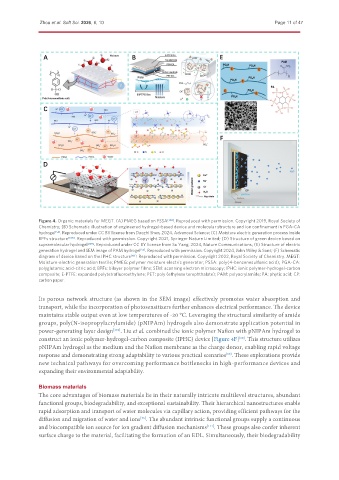
               Figure 4. Organic materials for MEGT. (A) PMEG based on PSSA [108] . Reproduced with permission. Copyright 2019, Royal Society of
               Chemistry; (B) Schematic illustration of engineered hydrogel-based device and molecular structure and ion confinement in PGA-CA
               hydrogel [54] . Reproduced under CC BY license from Daozhi Shen, 2024, Advanced Science; (C) Moisture electric generation process inside
               BPFs structure [105] . Reproduced with permission. Copyright 2021, Springer Nature Limited; (D) Structure of green device based on
               supramolecular hydrogel [109] . Reproduced under CC BY license from Su Yang, 2024, Nature Communications; (E) Structure of electric
               generation hydrogel and SEM image of PAM hydrogel [55] . Reproduced with permission. Copyright 2024, John Wiley & Sons; (F) Schematic
               diagram of device based on the IPHC structure [60] . Reproduced with permission. Copyright 2022, Royal Society of Chemistry. MEGT:
               Moisture-electric generation textile; PMEG: polymer moisture electric generator; PSSA: poly(4-benzenesulfonic acid); PGA-CA:
               polyglutamic acid-citric acid; BPFs: bilayer polymer films; SEM: scanning electron microscopy; IPHC: ionic polymer-hydrogel-carbon
               composite; E-PTFE: expanded polytetrafluoroethylene; PET: poly (ethylene terephthalate); PAM: polyacrylamide; PA: phytic acid; CP:
               carbon paper.

               Its porous network structure (as shown in the SEM image) effectively promotes water absorption and
               transport, while the incorporation of photosensitizers further enhances electrical performance. The device
               maintains stable output even at low temperatures of -20 °C. Leveraging the structural similarity of amide
               groups, poly(N-isopropylacrylamide) (pNIPAm) hydrogels also demonstrate application potential in
               power-generating layer design [110] . Liu et al. combined the ionic polymer Nafion with pNIPAm hydrogel to
               construct an ionic polymer-hydrogel-carbon composite (IPHC) device [Figure 4F] . This structure utilizes
                                                                                     [60]
               pNIPAm hydrogel as the medium and the Nafion membrane as the charge donor, enabling rapid voltage
               response and demonstrating strong adaptability to various practical scenarios . These explorations provide
                                                                                [60]
               new technical pathways for overcoming performance bottlenecks in high-performance devices and
               expanding their environmental adaptability.


               Biomass materials
               The core advantages of biomass materials lie in their naturally intricate multilevel structures, abundant
               functional groups, biodegradability, and exceptional sustainability. Their hierarchical nanostructures enable
               rapid adsorption and transport of water molecules via capillary action, providing efficient pathways for the
               diffusion and migration of water and ions . The abundant intrinsic functional groups supply a continuous
                                                  [76]
               and biocompatible ion source for ion gradient diffusion mechanisms [111] . These groups also confer inherent
               surface charge to the material, facilitating the formation of an EDL. Simultaneously, their biodegradability

