


Page 72 - Read Online
P. 72
Zhou et al. Soft Sci. 2026, 6, 10                                                  Page 9 of 47


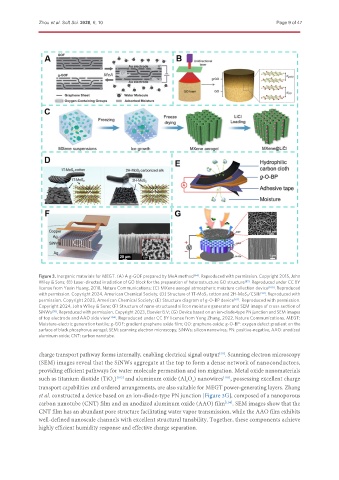
               Figure 3. Inorganic materials for MEGT. (A) A g-GOF prepared by MeA method [94] . Reproduced with permission. Copyright 2015, John
               Wiley & Sons; (B) Laser-directed irradiation of GO block for the preparation of heterostructure GO structure [87] . Reproduced under CC BY
               license from Yaxin Huang, 2018, Nature Communications; (C) MXene aerogel atmospheric moisture collection device [100] . Reproduced
               with permission. Copyright 2024, American Chemical Society; (D) Structure of 1T-MoS 2  cotton and 2H-MoS 2 /CSilk [98] . Reproduced with
               permission. Copyright 2023, American Chemical Society; (E) Structure diagram of g-O-BP device [62] . Reproduced with permission.
               Copyright 2024, John Wiley & Sons; (F) Structure of nano-structured silicon moisture generator and SEM image of cross section of
               SiNWs [58] . Reproduced with permission. Copyright 2023, Elsevier B.V; (G) Device based on an ion-diode-type PN junction and SEM images
               of top electrode and AAO side view  [104] . Reproduced under CC BY license from Yong Zhang, 2022, Nature Communications. MEGT:
               Moisture-electric generation textile; g-GOF: gradient graphene oxide film; GO: graphene oxide; g-O-BP: oxygen defect gradient on the
               surface of black phosphorus aerogel; SEM: scanning electron microscopy; SiNWs: silicon nanowires; PN: positive-negative; AAO: anodized
               aluminum oxide; CNT: carbon nanotube.


               charge transport pathway forms internally, enabling electrical signal output . Scanning electron microscopy
                                                                              [58]
               (SEM) images reveal that the SiNWs aggregate at the top to form a dense network of nanoconductors,
               providing efficient pathways for water molecule permeation and ion migration. Metal oxide nanomaterials
               such as titanium dioxide (TiO ) [102]  and aluminum oxide (Al O ) nanowires [103] , possessing excellent charge
                                                                     3
                                         2
                                                                  2
               transport capabilities and ordered arrangements, are also suitable for MEGT power-generating layers. Zhang
               et al. constructed a device based on an ion-diode-type PN junction [Figure 3G], composed of a nanoporous
               carbon nanotube (CNT) film and an anodized aluminum oxide (AAO) film [104] . SEM images show that the
               CNT film has an abundant pore structure facilitating water vapor transmission, while the AAO film exhibits
               well-defined nanoscale channels with excellent structural tunability. Together, these components achieve
               highly efficient humidity response and effective charge separation.

