


Page 68 - Read Online
P. 68
Zhou et al. Soft Sci. 2026, 6, 10                                                  Page 5 of 47


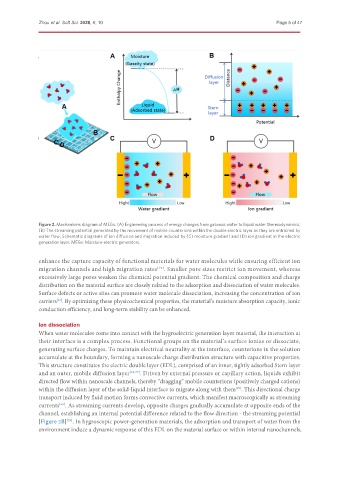
               Figure 2. Mechanisms diagram of MEGs. (A) Engineering process of energy changes from gaseous water to liquid water thermodynamics;
               (B) The streaming potential generated by the movement of mobile counterions within the double electric layer as they are entrained by
               water flow; Schematic diagrams of ion diffusion and migration induced by (C) moisture gradient and (D) ion gradient in the electric
               generation layer. MEGs: Moisture-electric generators.


               enhance the capture capacity of functional materials for water molecules while ensuring efficient ion
               migration channels and high migration rates . Smaller pore sizes restrict ion movement, whereas
                                                        [76]
               excessively large pores weaken the chemical potential gradient. The chemical composition and charge
               distribution on the material surface are closely related to the adsorption and dissociation of water molecules.
               Surface defects or active sites can promote water molecule dissociation, increasing the concentration of ion
               carriers . By optimizing these physicochemical properties, the material’s moisture absorption capacity, ionic
                     [62]
               conduction efficiency, and long-term stability can be enhanced.

               Ion dissociation
               When water molecules come into contact with the hygroelectric generation layer material, the interaction at
               their interface is a complex process. Functional groups on the material’s surface ionize or dissociate,
               generating surface charges. To maintain electrical neutrality at the interface, counterions in the solution
               accumulate at the boundary, forming a nanoscale charge distribution structure with capacitive properties.
               This structure constitutes the electric double layer (EDL), comprised of an inner, tightly adsorbed Stern layer
               and an outer, mobile diffusion layer [65,77] . Driven by external pressure or capillary action, liquids exhibit
               directed flow within nanoscale channels, thereby “dragging” mobile counterions (positively charged cations)
               within the diffusion layer of the solid-liquid interface to migrate along with them . This directional charge
                                                                                    [78]
               transport induced by fluid motion forms convective currents, which manifest macroscopically as streaming
               currents . As streaming currents develop, opposite charges gradually accumulate at opposite ends of the
                      [68]
               channel, establishing an internal potential difference related to the flow direction - the streaming potential
               [Figure 2B] . In hygroscopic power-generation materials, the adsorption and transport of water from the
                        [79]
               environment induce a dynamic response of this EDL on the material surface or within internal nanochannels,

