


Page 67 - Read Online
P. 67
Page 4 of 47                                                          Zhou et al. Soft Sci. 2026, 6, 10


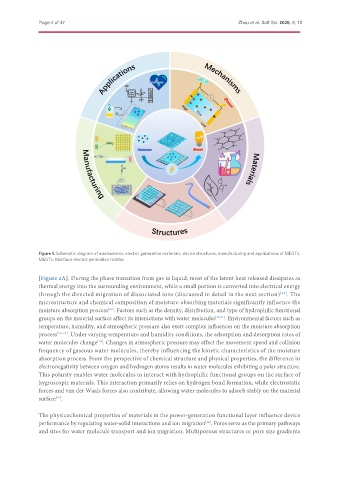
               Figure 1. Schematic diagram of mechanisms, electric generation materials, device structures, manufacturing and applications of MEGTs.
               MEGTs: Moisture-electric generation textiles.


               [Figure 2A]. During the phase transition from gas to liquid, most of the latent heat released dissipates as
               thermal energy into the surrounding environment, while a small portion is converted into electrical energy
               through the directed migration of dissociated ions (discussed in detail in the next section) . The
                                                                                                   [68]
               microstructure and chemical composition of moisture-absorbing materials significantly influence the
               moisture absorption process . Factors such as the density, distribution, and type of hydrophilic functional
                                       [69]
               groups on the material surface affect its interactions with water molecules [70,71] . Environmental factors such as
               temperature, humidity, and atmospheric pressure also exert complex influences on the moisture absorption
               process [72-74] . Under varying temperature and humidity conditions, the adsorption and desorption rates of
               water molecules change . Changes in atmospheric pressure may affect the movement speed and collision
                                   [18]
               frequency of gaseous water molecules, thereby influencing the kinetic characteristics of the moisture
               absorption process. From the perspective of chemical structure and physical properties, the difference in
               electronegativity between oxygen and hydrogen atoms results in water molecules exhibiting a polar structure.
               This polarity enables water molecules to interact with hydrophilic functional groups on the surface of
               hygroscopic materials. This interaction primarily relies on hydrogen bond formation, while electrostatic
               forces and van der Waals forces also contribute, allowing water molecules to adsorb stably on the material
               surface .
                     [75]

               The physicochemical properties of materials in the power-generation functional layer influence device
               performance by regulating water-solid interactions and ion migration . Pores serve as the primary pathways
                                                                         [32]
               and sites for water molecule transport and ion migration. Multiporous structures or pore size gradients

