


Page 142 - Read Online
P. 142
Shipitsyn et al. Energy Mater 2023;3:300038  https://dx.doi.org/10.20517/energymater.2023.22  Page 5 of 37


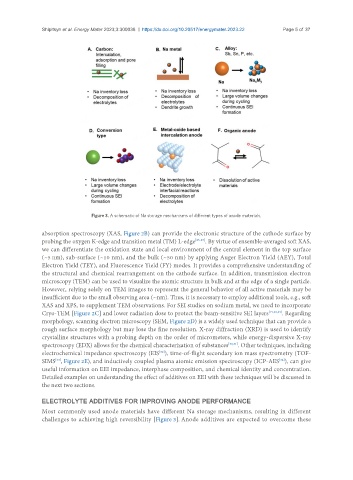
                                Figure 3. A schematic of Na storage mechanisms of different types of anode materials.

               absorption spectroscopy (XAS, Figure 2B) can provide the electronic structure of the cathode surface by
               probing the oxygen K-edge and transition metal (TM) L-edge [25-27] . By virtue of ensemble-averaged soft XAS,
               we can differentiate the oxidation state and local environment of the central element in the top surface
               (~5 nm), sub-surface (~10 nm), and the bulk (~50 nm) by applying Auger Electron Yield (AEY), Total
               Electron Yield (TEY), and Fluorescence Yield (FY) modes. It provides a comprehensive understanding of
               the structural and chemical rearrangement on the cathode surface. In addition, transmission electron
               microscopy (TEM) can be used to visualize the atomic structure in bulk and at the edge of a single particle.
               However, relying solely on TEM images to represent the general behavior of all active materials may be
               insufficient due to the small observing area (~nm). Thus, it is necessary to employ additional tools, e.g., soft
               XAS and XPS, to supplement TEM observations. For SEI studies on sodium metal, we need to incorporate
               Cryo-TEM [Figure 2C] and lower radiation dose to protect the beam-sensitive SEI layers [19,28,29] . Regarding
               morphology, scanning electron microscopy (SEM, Figure 2D) is a widely used technique that can provide a
               rough surface morphology but may lose the fine resolution. X-ray diffraction (XRD) is used to identify
               crystalline structures with a probing depth on the order of micrometers, while energy-dispersive X-ray
               spectroscopy (EDX) allows for the chemical characterization of substances [30,31] . Other techniques, including
                                                       [32]
               electrochemical impedance spectroscopy (EIS ), time-of-flight secondary ion mass spectrometry (TOF-
               SIMS , Figure 2E), and inductively coupled plasma atomic emission spectroscopy (ICP-AES ), can give
                                                                                               [34]
                    [33]
               useful information on EEI impedance, interphase composition, and chemical identity and concentration.
               Detailed examples on understanding the effect of additives on EEI with these techniques will be discussed in
               the next two sections.

               ELECTROLYTE ADDITIVES FOR IMPROVING ANODE PERFORMANCE
               Most commonly used anode materials have different Na storage mechanisms, resulting in different
               challenges to achieving high reversibility [Figure 3]. Anode additives are expected to overcome these

