


Page 39 - Read Online
P. 39
Page 10 of 28                          Zhang et al. Soft Sci 2024;4:39  https://dx.doi.org/10.20517/ss.2024.34


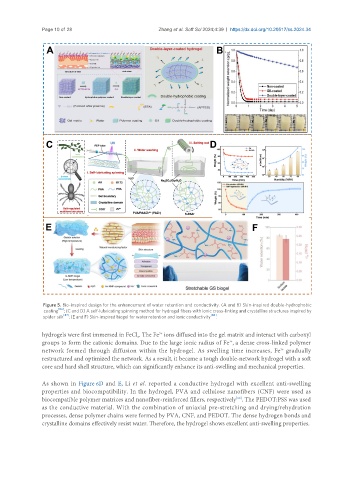
                Figure 5. Bio-inspired design for the enhancement of water retention and conductivity. (A and B) Skin-inspired double-hydrophobic
                coating [86] ; (C and D) A self-lubricating spinning method for hydrogel fibers with ionic cross-linking and crystalline structures inspired by
                spider silk [87] ; (E and F) Skin-inspired biogel for water retention and ionic conductivity [88] .


                                                       3+
               hydrogels were first immersed in FeCl . The Fe  ions diffused into the gel matrix and interact with carboxyl
                                               3
               groups to form the cationic domains. Due to the large ionic radius of Fe , a dense cross-linked polymer
                                                                              3+
                                                                                                3+
               network formed through diffusion within the hydrogel. As swelling time increases, Fe  gradually
               restructured and optimized the network. As a result, it became a tough double-network hydrogel with a soft
               core and hard shell structure, which can significantly enhance its anti-swelling and mechanical properties.
               As shown in Figure 6D and E, Li et al. reported a conductive hydrogel with excellent anti-swelling
               properties and biocompatibility. In the hydrogel, PVA and cellulose nanofibers (CNF) were used as
               biocompatible polymer matrices and nanofiber-reinforced fillers, respectively . The PEDOT:PSS was used
                                                                                 [90]
               as the conductive material. With the combination of uniaxial pre-stretching and drying/rehydration
               processes, dense polymer chains were formed by PVA, CNF, and PEDOT. The dense hydrogen bonds and
               crystalline domains effectively resist water. Therefore, the hydrogel shows excellent anti-swelling properties.

