


Page 161 - Read Online
P. 161
Page 12 of 29                          Wang et al. Soft Sci. 2025, 5, 28  https://dx.doi.org/10.20517/ss.2025.11


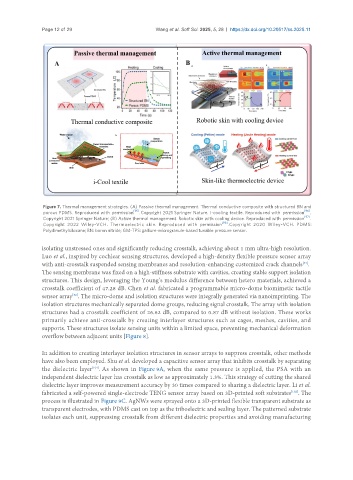
                Figure 7. Thermal management strategies. (A) Passive thermal management. Thermal conductive composite with structured BN and
                                              [95]                                                      [96]
                porous PDMS. Reproduced with  permission  . Copyright 2021 Springer Nature. I-cooling textile. Reproduced with  permission  .
                                                                                                        [97]
                Copyright 2021 Springer Nature; (B) Active thermal management. Robotic skin with cooling device. Reproduced with  permission  .
                                                                            [99]
                Copyright  2022  Wiley-VCH.  Thermoelectric  skin.  Reproduced  with  permission  . Copyright  2020  Wiley-VCH.  PDMS:
                Polydimethylsiloxane; BN: boron nitride; GM-TPS: gallium-microgranule-based tunable pressure sensor.
               isolating unstressed ones and significantly reducing crosstalk, achieving about 1 mm ultra-high resolution.
               Luo et al., inspired by cochlear sensing structures, developed a high-density flexible pressure sensor array
               with anti-crosstalk suspended sensing membranes and resolution-enhancing customized crack channels .
                                                                                                       [33]
               The sensing membrane was fixed on a high-stiffness substrate with cavities, creating stable support isolation
               structures. This design, leveraging the Young’s modulus difference between hetero materials, achieved a
               crosstalk coefficient of 47.28 dB. Chen et al. fabricated a programmable micro-dome biomimetic tactile
                         [32]
               sensor array . The micro-dome and isolation structures were integrally generated via nanoimprinting. The
               isolation structures mechanically separated dome groups, reducing signal crosstalk. The array with isolation
               structures had a crosstalk coefficient of 26.62 dB, compared to 0.87 dB without isolation. These works
               primarily achieve anti-crosstalk by creating interlayer structures such as cages, meshes, cavities, and
               supports. These structures isolate sensing units within a limited space, preventing mechanical deformation
               overflow between adjacent units [Figure 8].


               In addition to creating interlayer isolation structures in sensor arrays to suppress crosstalk, other methods
               have also been employed. Shu et al. developed a capacitive sensor array that inhibits crosstalk by separating
                                [101]
               the dielectric layer . As shown in Figure 9A, when the same pressure is applied, the PSA with an
               independent dielectric layer has crosstalk as low as approximately 1.3%. This strategy of cutting the shared
               dielectric layer improves measurement accuracy by 30 times compared to sharing a dielectric layer. Li et al.
                                                                                                   [102]
               fabricated a self-powered single-electrode TENG sensor array based on 3D-printed soft substrates . The
               process is illustrated in Figure 9C. AgNWs were sprayed onto a 3D-printed flexible transparent substrate as
               transparent electrodes, with PDMS cast on top as the triboelectric and sealing layer. The patterned substrate
               isolates each unit, suppressing crosstalk from different dielectric properties and avoiding manufacturing

