


Page 95 - Read Online
P. 95
Kim et al. Soft Sci 2024;4:33  https://dx.doi.org/10.20517/ss.2024.28           Page 19 of 31


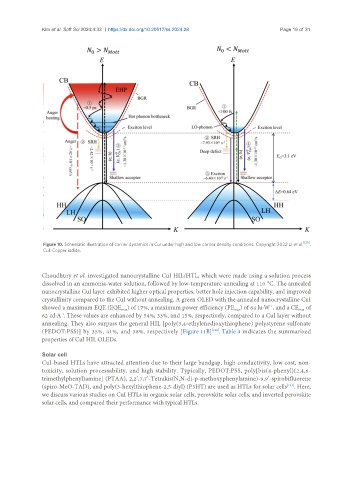
                Figure 10. Schematic illustration of carrier dynamics in CuI under high and low carrier density conditions. Copyright 2022 Li  et al. [120] .
                CuI: Copper iodide.


               Choudhury et al. investigated nanocrystalline CuI HIL/HTL, which were made using a solution process
               dissolved in an ammonia-water solution, followed by low-temperature annealing at 110 °C. The annealed
               nanocrystalline CuI layer exhibited higher optical properties, better hole injection capability, and improved
               crystallinity compared to the CuI without annealing. A green OLED with the annealed nanocrystalline CuI
                                                                                            -1
               showed a maximum EQE (EQE ) of 17%, a maximum power efficiency (PE ) of 64 lu·W , and a CE  of
                                                                                                      max
                                                                                max
                                          max
               62 cd·A . These values are enhanced by 54%, 33%, and 15%, respectively, compared to a CuI layer without
                      -1
               annealing. They also surpass the general HIL [poly(3,4-ethylenedioxythiophene) polystyrene sulfonate
               (PEDOT:PSS)] by 35%, 41%, and 38%, respectively [Figure 11B] . Table 4 indicates the summarized
                                                                        [128]
               properties of CuI HIL OLEDs.
               Solar cell
               CuI-based HTLs have attracted attention due to their large bandgap, high conductivity, low cost, non-
               toxicity, solution processability, and high stability. Typically, PEDOT:PSS, poly[bis(4-phenyl)(2,4,6-
               trimethylphenyl)amine] (PTAA), 2,2’,7,7’-Tetrakis(N,N-di-p-methoxyphenylamine)-9,9’-spirobifluorene
               (spiro-MeO-TAD), and poly(3-hexylthiophene-2,5-diyl) (P3HT) are used as HTLs for solar cells . Here,
                                                                                                  [131]
               we discuss various studies on CuI HTLs in organic solar cells, perovskite solar cells, and inverted perovskite
               solar cells, and compared their performance with typical HTLs.

