


Page 157 - Read Online
P. 157
Page 18 of 31                            Lee et al. Soft Sci 2024;4:38  https://dx.doi.org/10.20517/ss.2024.36


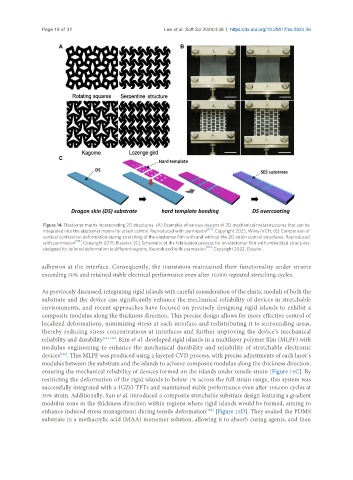
                Figure 14. Elastomer matrix incorporating 2D structures. (A) Examples of various designs of 2D mechanical metastructures that can be
                                                                       [113]
                integrated into the elastomer matrix for strain control. Reproduced with permission  . Copyright 2023, Wiley-VCH; (B) Comparison of
                vertical contraction deformation during stretching of the elastomer film with and without the 2D strain control structures. Reproduced
                          [114]
                with permission  . Copyright 2019, Elsevier; (C) Schematic of the fabrication process for an elastomer film with embedded structures
                                                                      [115]
                designed for tailored deformation in different regions. Reproduced with permission  . Copyright 2022, Elsevier.
               adhesion at the interface. Consequently, the transistors maintained their functionality under strains
               exceeding 50% and retained stable electrical performance even after 10,000 repeated stretching cycles.

               As previously discussed, integrating rigid islands with careful consideration of the elastic moduli of both the
               substrate and the device can significantly enhance the mechanical reliability of devices in stretchable
               environments, and recent approaches have focused on precisely designing rigid islands to exhibit a
               composite modulus along the thickness direction. This precise design allows for more effective control of
               localized deformations, minimizing stress at each interface and redistributing it to surrounding areas,
               thereby reducing stress concentrations at interfaces and further improving the device’s mechanical
               reliability and durability [124-126] . Kim et al. developed rigid islands in a multilayer polymer film (MLPF) with
               modulus engineering to enhance the mechanical durability and reliability of stretchable electronic
               devices . This MLPF was produced using a layered CVD process, with precise adjustments of each layer’s
                     [125]
               modulus between the substrate and the islands to achieve composite modulus along the thickness direction,
               ensuring the mechanical reliability of devices formed on the islands under tensile strain [Figure 15C]. By
               restricting the deformation of the rigid islands to below 1% across the full strain range, this system was
               successfully integrated with a-IGZO TFTs and maintained stable performance even after 100,000 cycles at
               30% strain. Additionally, Sun et al. introduced a composite stretchable substrate design featuring a gradient
               modulus zone in the thickness direction within regions where rigid islands would be formed, aiming to
                                                                       [126]
               enhance induced stress management during tensile deformation  [Figure 15D]. They soaked the PDMS
               substrate in a methacrylic acid (MAA) monomer solution, allowing it to absorb curing agents, and then

