


Page 73 - Read Online
P. 73
Page 8 of 32                                                                       Zhao et al. Soft Sci 2024;4:18  https://dx.doi.org/10.20517/ss.2024.04

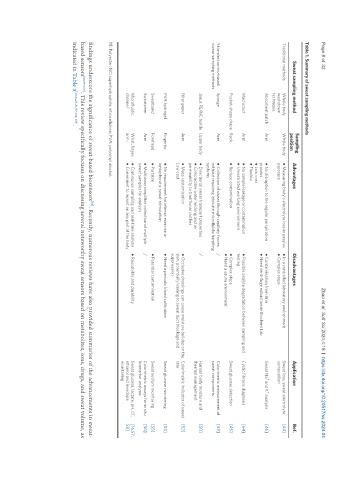
               Table 1. Summary of sweat sampling methods
                                              Sampling
                      Sweat sampling method             Advantages                    Disadvantages                       Application           Ref.
                                              position
                Traditional methods  Whole body   Whole body  ● Measuring body’s electrolyte loss in passive   ● In a controlled laboratory environment   Sweat loss, sweat electrolyte   [44]
                                washdown                exposure                      ● Complex steps                     composition
                                technique
                                                                                                                                     +
                                                                                                                                +
                                Absorbent patch  Arm    ● No disruption to the regular perspiration   ● Contamination from skin   Sweat Na  and K  analysis  [46]
                                                        process                       ● Need centrifuge extraction in Biochem Lab
                                                        ● Low cost
                                                        ● Flexible
                                Macroduct     Arm       ● No sample leakage or contamination   ● Possible analyte degradation between sampling and   Cystic fibrosis diagnosis  [64]
                                                        ● Unrestricted working environment  testing
                                Pocket-shape drape Back  ● Reduce contamination       ● Complex steps                     Sweat glucose detection  [45]
                                                                                      ● Need a sauna environment
                Skin-electronics-based   Sponge  Arm    ● Collection of sweat through capillary forces   /                Colorimetric measurement of   [49]
                sweat sampling methods                  without requiring intricate microfluidic handling                 sweat components
                                                        systems
                                Janus PE/NC textile Upper body  ● Directional sweat transport properties   /              Human body moisture and   [50]
                                                        ● Comparable water wicking and air                                thermal management
                                                        permeability to traditional clothes
                                Filter paper  Arm       ● Mass customization          ● Occlusive dressings can cause moisture buildup on the  Colorimetric indicator of sweat   [52]
                                                        Low cost                      skin, potentially leading to sweat duct blockage and   rate
                                                                                      suppression
                                PVA hydrogel  Fingertip  ● No requirement for intense exercise or   ● Need a periodic blood calibration  Sweat glucose monitoring  [54]
                                                        iontophoretic sweat stimulation
                                Sweatband     Forehead  ● Portable                    ● Potential contamination           Sweat sodium monitoring  [55]
                                Sweatainer    Arm       ● Multidraw simplifies collection of multiple   /                 Colorimetric assays for in situ   [56]
                                                        sweat samples for analysis                                        biomarker analysis
                                                                                                                                             -
                                Microfluidic   Wrist, finger,   ● Continuous sampling and real-time analysis   ● Reusability and durability  Sweat glucose, lactate, pH, Cl ,   [16,57,
                                channel       arm       ● Convenient to mount on any part of the body                     ethanol and levodopa   58]
                                                                                                                          monitoring
               PE: Polyester; NC: superhydrophilic nitrocellulose; PVA: polyvinyl alcohol.

               findings underscore the significance of sweat-based biosensors . Recently, numerous reviews have also provided summaries of the advancements in sweat-
                                                                     [98]
               based sensors [28,99-103] . This review specifically focuses on discussing several noteworthy sweat sensors based on metabolites, ions, drugs, and sweat volume, as
               indicated in Table 3 [18,54,61,81,97,104-109] .

