


Page 68 - Read Online
P. 68
Zhao et al. Soft Sci 2024;4:18  https://dx.doi.org/10.20517/ss.2024.04           Page 3 of 32


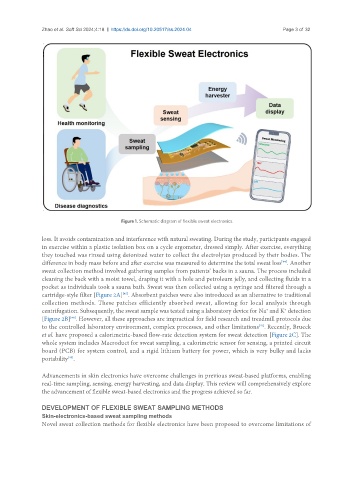
                                          Figure 1. Schematic diagram of flexible sweat electronics.


               loss. It avoids contamination and interference with natural sweating. During the study, participants engaged
               in exercise within a plastic isolation box on a cycle ergometer, dressed simply. After exercise, everything
               they touched was rinsed using deionized water to collect the electrolytes produced by their bodies. The
                                                                                                [44]
               difference in body mass before and after exercise was measured to determine the total sweat loss . Another
               sweat collection method involved gathering samples from patients’ backs in a sauna. The process included
               cleaning the back with a moist towel, draping it with a hole and petroleum jelly, and collecting fluids in a
               pocket as individuals took a sauna bath. Sweat was then collected using a syringe and filtered through a
                                          [45]
               cartridge-style filter [Figure 2A] . Absorbent patches were also introduced as an alternative to traditional
               collection methods. These patches efficiently absorbed sweat, allowing for local analysis through
                                                                                                 +
                                                                                           +
               centrifugation. Subsequently, the sweat sample was tested using a laboratory device for Na  and K  detection
               [Figure 2B] . However, all these approaches are impractical for field research and treadmill protocols due
                         [46]
                                                                                        [47]
               to the controlled laboratory environment, complex processes, and other limitations . Recently, Brueck
               et al. have proposed a calorimetric-based flow-rate detection system for sweat detection [Figure 2C]. The
               whole system includes Macroduct for sweat sampling, a calorimetric sensor for sensing, a printed circuit
               board (PCB) for system control, and a rigid lithium battery for power, which is very bulky and lacks
               portability .
                        [48]
               Advancements in skin electronics have overcome challenges in previous sweat-based platforms, enabling
               real-time sampling, sensing, energy harvesting, and data display. This review will comprehensively explore
               the advancement of flexible sweat-based electronics and the progress achieved so far.

               DEVELOPMENT OF FLEXIBLE SWEAT SAMPLING METHODS
               Skin-electronics-based sweat sampling methods
               Novel sweat collection methods for flexible electronics have been proposed to overcome limitations of

