


Page 69 - Read Online
P. 69
Page 4 of 32                            Zhao et al. Soft Sci 2024;4:18  https://dx.doi.org/10.20517/ss.2024.04


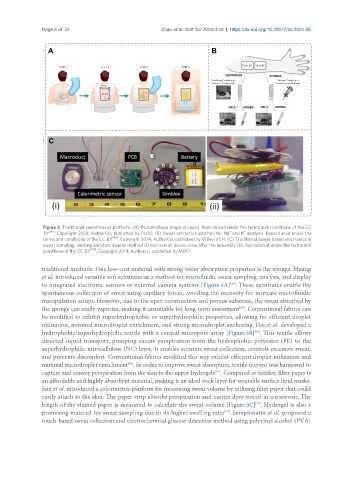
                Figure 2. Traditional sweat-based platform. (A) Pocket-shape drape in sauna. Reproduced under the terms and conditions of the CC
                                                                              +
                                                                                   +
                BY [45] . Copyright 2018, Author(s), published by PLOS; (B) Sweat extraction patched for Na  and K  analysis. Reproduced under the
                terms and conditions of the CC BY [46] . Copyright 2014, Author(s), published by Wiley-VCH; (C) Traditional sweat-based electronics in
                sweat sampling, sensing and data display method (i) and overall device view after the assembly (ii). Reproduced under the terms and
                                [48]
                conditions of the CC BY  . Copyright 2018, Author(s), published by MDPI.
               traditional methods. One low-cost material with strong water absorption properties is the sponge. Huang
               et al. introduced versatile soft substrates as a method for microfluidic sweat sampling, analysis, and display
               to integrated electronic sensors or external camera systems [Figure 3A] . These substrates enable the
                                                                               [49]
               spontaneous collection of sweat using capillary forces, avoiding the necessity for intricate microfluidic
               manipulation setups. However, due to the open construction and porous substrate, the sweat absorbed by
               the sponge can easily vaporize, making it unsuitable for long-term assessment . Conventional fabrics can
                                                                                  [49]
               be modified to exhibit superhydrophobic or superhydrophilic properties, allowing for efficient droplet
               utilization, minimal microdroplet enrichment, and strong microdroplet anchoring. Dai et al. developed a
                                                                                       [50]
               hydrophobic/superhydrophilic textile with a conical micropore array [Figure 3B] . This textile allows
               directed liquid transport, pumping excess perspiration from the hydrophobic polyester (PE) to the
               superhydrophilic nitrocellulose (NC) layer. It enables accurate sweat collection, controls excessive sweat,
               and prevents discomfort. Conventional fabrics modified this way exhibit efficient droplet utilization and
               minimal microdroplet enrichment . In order to improve sweat absorption, textile (rayon) was harnessed to
                                            [50]
                                                                         [51]
               capture and convey perspiration from the skin to the upper hydrogels . Compared to textiles, filter paper is
               an affordable and highly absorbent material, making it an ideal wick layer for wearable surface lipid masks.
               Jain et al. introduced a colorimetric platform for measuring sweat volume by utilizing filter paper that could
               easily attach to the skin. The paper strip absorbs perspiration and carries dyes stored in a reservoir. The
               length of the stained paper is measured to calculate the sweat volume [Figure 3C] . Hydrogel is also a
                                                                                       [52]
                                                                             [53]
               promising material for sweat sampling due to its higher swelling ratio . Sempionatto et al. proposed a
               touch-based sweat collection and electrochemical glucose detection method using polyvinyl alcohol (PVA)

