


Page 76 - Read Online
P. 76
Page 6 of 15            Tropiano et al. Mini-invasive Surg 2024;8:17  https://dx.doi.org/10.20517/2574-1225.2024.41


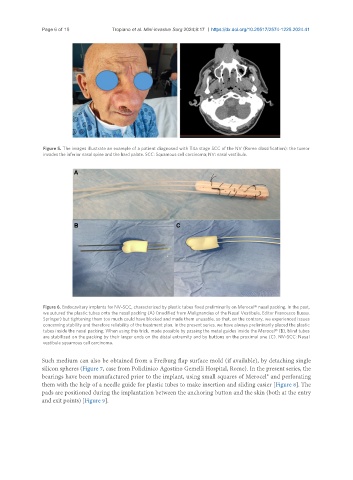
                Figure 5. The images illustrate an example of a patient diagnosed with T4a stage SCC of the NV (Rome classification): the tumor
                invades the inferior nasal spine and the hard palate. SCC: Squamous cell carcinoma; NV: nasal vestibule.


                Figure 6. Endocavitary implants for NV-SCC, characterized by plastic tubes fixed preliminarily on Merocel® nasal packing. In the past,
                we sutured the plastic tubes onto the nasal packing (A) (modified from Malignancies of the Nasal Vestibule. Editor Francesco Bussu.
                Springer) but tightening them too much could have blocked and made them unusable, so that, on the contrary, we experienced issues
                concerning stability and therefore reliability of the treatment plan. In the present series, we have always preliminarily placed the plastic
                tubes inside the nasal packing. When using this trick, made possible by passing the metal guides inside the Merocel® (B), blind tubes
                are stabilized on the packing by their larger ends on the distal extremity and by buttons on the proximal one (C). NV-SCC: Nasal
                vestibule squamous cell carcinoma.

               Such medium can also be obtained from a Freiburg flap surface mold (if available), by detaching single
               silicon spheres (Figure 7, case from Policlinico Agostino Gemelli Hospital, Rome). In the present series, the
               bearings have been manufactured prior to the implant, using small squares of Merocel® and perforating
               them with the help of a needle guide for plastic tubes to make insertion and sliding easier [Figure 8]. The
               pads are positioned during the implantation between the anchoring button and the skin (both at the entry
               and exit points) [Figure 9].

