


Page 16 - Read Online
P. 16
Page 140               Eitan et al. Extracell Vesicles Circ Nucleic Acids 2023;4:133-150  https://dx.doi.org/10.20517/evcna.2023.13

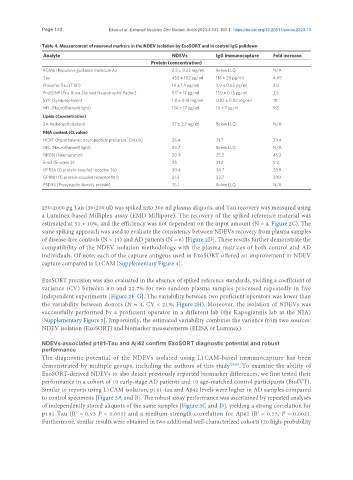
               Table 4. Measurement of neuronal markers in the NDEV isolation by ExoSORT and in control IgG pulldown
                Analyte                                    NDEVs          IgG immunocapture  Fold increase
                                                    Protein (concentration)
                RGMa (Repulsive guidance molecule A)       2.3 ± 0.22 mg/ml  Below LLQ       N/A
                Tau                                        458 ± 102 pg/ml  118 ± 20 pg/ml   4.05
                Phospho-Tau (T181)                         10 ± 1.4 pg/ml  3.9 ± 0.62 pg/ml  3.0
                ProBDNF (Pro-Brain-Derived Neurotrophic Factor)  517 ± 17 pg/ml  150 ± 0.13 pg/ml  3.6
                SYP (Synaptophysin)                        1.8 ± 0.18 mg/ml  0.22 ± 0.02 mg/ml  10
                NFL (Neurofilament light)                  134 ± 17 pg/ml  16 ± 7 pg.ml      9.3
                Lipids (Concentration)
                24-hydrohycholesterol                      27 ± 2.7 ng/ml  Below LLQ         N/A
                RNA content (Ct value)
                HCRT (hypothalamic neuropeptide precursor, Orexin)  26.4  31.7               39.4
                NFL (Neurofilament light)                  29.7           Below LLQ          N/A
                NRGN (Neurogranin)                         20.8           25.3               45.2
                Eno2 (Enolase 2)                           28             31.2               9.2
                GPR26 (G protein-coupled receptor 26)      30.4           34.7               25.9
                GPR101 (G protein-coupled receptor 101)    21.3           32.7               200
                PSD95 (Presynaptic density protein)        35.1           Below LLQ          N/A


               250-2000 pg Tau (30-200 ul) was spiked into 300 ml plasma aliquots, and Tau recovery was measured using
               a Luminex-based Milliplex assay (EMD Millipore). The recovery of the spiked reference material was
               estimated at 51 ± 10%, and the efficiency was not dependent on the input amount (N = 4, Figure 2C). The
               same spiking approach was used to evaluate the consistency between NDEVs recovery from plasma samples
               of disease-free controls (N = 11) and AD patients (N = 6) [Figure 2D]. These results further demonstrate the
               compatibility of the NDEV isolation methodology with the plasma matrices of both control and AD
               individuals. Of note, each of the capture antigens used in ExoSORT offered an improvement in NDEV
               capture compared to L1CAM [Supplementary Figure 4].

               ExoSORT precision was also evaluated in the absence of spiked reference standards, yielding a coefficient of
               variance (CV) between 8.0 and 22.7% for two random plasma samples processed repeatedly in five
               independent experiments [Figure 2E-G]. The variability between two proficient operators was lower than
               the variability between donors (N = 4, CV < 21%; Figure 2H). Moreover, the isolation of NDEVs was
               successfully performed by a proficient operator in a different lab (the Kapogiannis lab at the NIA)
               [Supplementary Figure 5]. Importantly, the estimated variability combines the variance from two sources:
               NDEV isolation (ExoSORT) and biomarker measurements (ELISA or Luminex).


               NDEVs-associated p181-Tau and Aβ42 confirm ExoSORT diagnostic potential and robust
               performance
               The diagnostic potential of the NDEVs isolated using L1CAM-based immunocapture has been
               demonstrated by multiple groups, including the authors of this study [29,30] . To examine the ability of
               ExoSORT-derived NDEVs to also detect previously reported biomarker differences, we first tested their
               performance in a cohort of 10 early-stage AD patients and 10 age-matched control participants (BioIVT).
               Similar to reports using L1CAM isolation, p181-tau and Aβ42 levels were higher in AD samples compared
               to control specimens [Figure 3A and B]. The robust assay performance was ascertained by repeated analyses
               of independently stored aliquots of the same samples [Figure 3C and D], yielding a strong correlation for
                                                                                        2
                           2
               p181-Tau (R  = 0.93 P < 0.001) and a medium-strength correlation for Aβ42 (R  = 0.55, P = 0.002).
               Furthermore, similar results were obtained in two additional well-characterized cohorts (20 high-probability

