


Page 12 - Read Online
P. 12
Page 136               Eitan et al. Extracell Vesicles Circ Nucleic Acids 2023;4:133-150  https://dx.doi.org/10.20517/evcna.2023.13

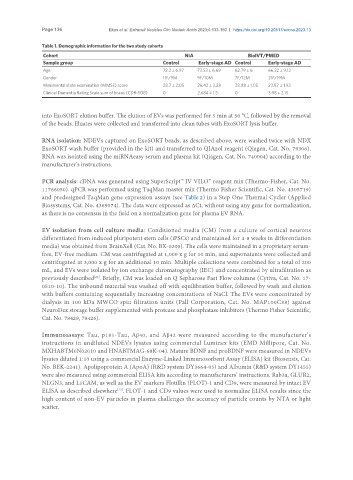
               Table 1. Demographic information for the two study cohorts
                Cohort                                         NIA                   BioIVT/PMED
                Sample group                            Control     Early-stage AD Control  Early-stage AD
                Age                                     72.3 ± 6.97  73.53 ± 6.69  62.79 ± 6  66.22 ± 9.12
                Gender                                  11F/9M      9F/10M      7F/12M     21F/19M
                Mini mental state examination (MMSE) score  28.7 ± 2.05  26.42 ± 3.28  28.88 ± 1.05  23.87 ± 1.93
                Clinical Dementia Rating Scale sum of boxes (CDR-SOB)  0  2.684 ± 1.5  0   3.98 ± 2.15


               into ExoSORT elution buffer. The elution of EVs was performed for 5 min at 50 °C, followed by the removal
               of the beads. Eluates were collected and transferred into clean tubes with ExoSORT lysis buffer.


               RNA isolation: NDEVs captured on ExoSORT beads, as described above, were washed twice with NDX
               ExoSORT wash buffer (provided in the kit) and transferred to QIAzol reagent (Qiagen, Cat. No. 79306).
               RNA was isolated using the miRNAeasy serum and plasma kit (Qiagen, Cat. No. 740004) according to the
               manufacturer’s instructions.

               PCR analysis: cDNA was generated using SuperScript™ IV VILO™ reagent mix (Thermo-Fisher, Cat. No.
               11766050). qPCR was performed using TaqMan master mix (Thermo Fisher Scientific, Cat. No. 4305719)
               and predesigned TaqMan gene expression assays (see Table 2) in a Step One Thermal Cycler (Applied
               Biosystems, Cat. No. 4369074). The data were expressed as ΔCt, without using any gene for normalization,
               as there is no consensus in the field on a normalization gene for plasma EV RNA.


               EV isolation from cell culture media: Conditioned media (CM) from a culture of cortical neurons
               differentiated from induced pluripotent stem cells (iPSCs) and maintained for 4-8 weeks in differentiation
               media) was obtained from BrainXell (Cat. No. BX-0200). The cells were maintained in a proprietary serum-
               free, EV-free medium. CM was centrifugated at 1,000 x g for 10 min, and supernatants were collected and
               centrifugated at 3,000 x g for an additional 10 min. Multiple collections were combined for a total of 200
               mL, and EVs were isolated by ion exchange chromatography (IEC) and concentrated by ultrafiltration as
               previously described . Briefly, CM was loaded on Q Sepharose Fast Flow columns (Cytiva, Cat. No. 17-
                                 [22]
               0510-10). The unbound material was washed off with equilibration buffer, followed by wash and elution
               with buffers containing sequentially increasing concentrations of NaCl. The EVs were concentrated by
               dialysis in 100 kDa MWCO spin filtration units (Pall Corporation, Cat. No. MAP100C38) against
               NeuroDex storage buffer supplemented with protease and phosphatase inhibitors (Thermo Fisher Scientific,
               Cat. No. 78429, 78426).


               Immunoassays: Tau, p181-Tau, Aβ40, and Aβ42 were measured according to the manufacturer’s
               instructions in undiluted NDEVs lysates using commercial Luminex kits (EMD Millipore, Cat. No.
               MXHABTM0N02010 and HNABTMAG-68K-04). Mature BDNF and proBDNF were measured in NDEVs
               lysates diluted 1:10 using a commercial Enzyme-Linked Immunosorbent Assay (ELISA) kit (Biosensis, Cat.
               No. BEK-2241). Apolipoprotein A (ApoA) (R&D system DY3664-05) and Albumin (R&D system DY1455)
               were also measured using commercial ELISA kits according to manufacturers’ instructions. Rab3a, GLUR2,
               NLGN3, and L1CAM, as well as the EV markers Flotillin (FLOT)-1 and CD9, were measured by intact EV
               ELISA as described elsewhere . FLOT-1 and CD9 values were used to normalize ELISA results since the
                                         [23]
               high content of non-EV particles in plasma challenges the accuracy of particle counts by NTA or light
               scatter.

