


Page 14 - Read Online
P. 14
Page 138               Eitan et al. Extracell Vesicles Circ Nucleic Acids 2023;4:133-150  https://dx.doi.org/10.20517/evcna.2023.13

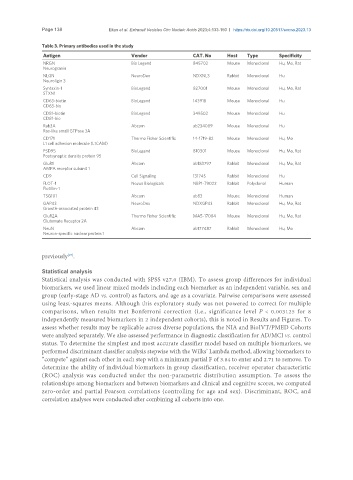
               Table 3. Primary antibodies used in the study
                Antigen                      Vendor               CAT. No     Host  Type       Specificity
                NRGN                         Bio Legend           845702      Mouse  Monoclonal  Hu, Mo, Rat
                Neurogranin
                NLGN                         NeuroDex             NDXNL3      Rabbit  Monoclonal  Hu
                Neuroligin 3
                Syntaxin-1                   BioLegend            827001      Mouse  Monoclonal  Hu, Mo, Rat
                STXN1
                CD63-biotin                  BioLegend            143918      Mouse  Monoclonal  Hu
                CD63-bio
                CD81-biotin                  BioLegend            349502      Mouse  Monoclonal  Hu
                CD81-bio
                Rab3A                        Abcam                ab234089    Mouse  Monoclonal  Hu
                Ras-like small GTPase 3A
                CD171                        Thermo Fisher Scientific  14-1719-82  Mouse  Monoclonal  Hu, Mo
                L1 cell adhesion molecule (L1CAM)
                PSD95                        BioLegend            810301      Mouse  Monoclonal  Hu, Mo, Rat
                Postsynaptic density protein 95
                GluR1                        Abcam                ab183797    Rabbit  Monoclonal  Hu, Mo, Rat
                AMPA receptor subunit 1
                CD9                          Cell Signaling       13174S      Rabbit  Monoclonal  Hu
                FLOT-1                       Novus Biologicals    NBP1-79022  Rabbit  Polyclonal  Human
                Flotillin-1
                TSG101                       Abcam                ab83        Mouse  Monoclonal  Human
                GAP43                        NeuroDex             NDXGP43     Rabbit  Monoclonal  Hu, Mo, Rat
                Growth-associated protein 43
                GluR2A                       Thermo Fisher Scientific  MA5-17084  Mouse  Monoclonal  Hu, Mo, Rat
                Glutamate Receptor 2A
                NeuN                         Abcam                ab177487    Rabbit  Monoclonal  Hu, Mo
                Neuron-specific nuclear protein 1


                        [25]
               previously .

               Statistical analysis
               Statistical analysis was conducted with SPSS v27.0 (IBM). To assess group differences for individual
               biomarkers, we used linear mixed models including each biomarker as an independent variable, sex and
               group (early-stage AD vs. control) as factors, and age as a covariate. Pairwise comparisons were assessed
               using least-squares means. Although this exploratory study was not powered to correct for multiple
               comparisons, when results met Bonferroni correction (i.e., significance level P < 0.003125 for 8
               independently measured biomarkers in 2 independent cohorts), this is noted in Results and Figures. To
               assess whether results may be replicable across diverse populations, the NIA and BioIVT/PMED Cohorts
               were analyzed separately. We also assessed performance in diagnostic classification for AD/MCI vs. control
               status. To determine the simplest and most accurate classifier model based on multiple biomarkers, we
               performed discriminant classifier analysis stepwise with the Wilks’ Lambda method, allowing biomarkers to
               “compete” against each other in each step with a minimum partial F of 3.84 to enter and 2.71 to remove. To
               determine the ability of individual biomarkers in group classification, receiver operator characteristic
               (ROC) analysis was conducted under the non-parametric distribution assumption. To assess the
               relationships among biomarkers and between biomarkers and clinical and cognitive scores, we computed
               zero-order and partial Pearson correlations (controlling for age and sex). Discriminant, ROC, and
               correlation analyses were conducted after combining all cohorts into one.

