


Page 56 - Read Online
P. 56
Page 8 of 17           Lekbir et al. Energy Mater. 2025, 5, 500101  https://dx.doi.org/10.20517/energymater.2025.46

               Table 3. Equivalent CEC for each TEG module

                Ref  Leg    Equivalent EI  for leg materials  Material density   Leg weight  CEC for leg   CEC for TEG module
                                     i
                                                        3
                            (MJ/kg)                (g/cm )         (g)       (MJ/leg)     (MJ)
                TEG1  n-type  151.82               2.43            0.0330    5.02         1284.38
                    p-type  151.82                 2.43            0.0330    5.02
                TEG2  n-type  141.2                7.64            0.1039    14.67        3567.34
                    p-type  143.76                 6.75            0.0918    13.2
                TEG3  n-type  144.6                5.26            0.0715    10.34        2991.05
                    p-type  143.77                 6.66            0.0906    13.02
                TEG4  n-type  150                  8.64            0.1175    17.63        4186.6
                    p-type  136.9                  8.10            0.1102    15.08
                TEG5  n-type  143.74               7.7             0.1047    15.05        3531.28
                    p-type  143.78                 6.41            0.0872    12.53
                TEG6  n-type  143.74               7.7             0.1047    15.05        3853.44
                    p-type  143.74                 7.7             0.1047    15.05
                TEG7  n-type  132.05               6.93            0.0942    12.45        3025.62
                    p-type  119.82                 6.87            0.0934    11.2
                TEG8  n-type  464.96               3.92            0.0533    24.79        6681.54
                    p-type  214.41                 9.4             0.1278    27.41


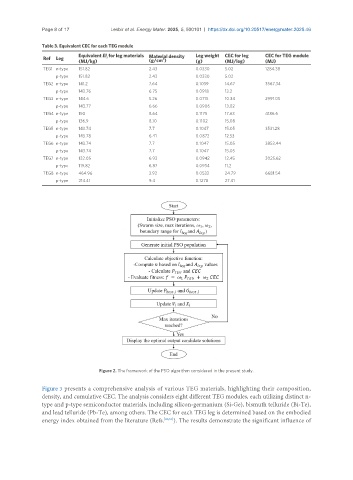
                                  Figure 2. The framework of the PSO algorithm considered in the present study.

               Figure 3 presents a comprehensive analysis of various TEG materials, highlighting their composition,
               density, and cumulative CEC. The analysis considers eight different TEG modules, each utilizing distinct n-
               type and p-type semiconductor materials, including silicon-germanium (Si-Ge), bismuth telluride (Bi-Te),
               and lead telluride (Pb-Te), among others. The CEC for each TEG leg is determined based on the embodied
               energy index obtained from the literature (Refs. [20,51] ). The results demonstrate the significant influence of

