


Page 87 - Read Online
P. 87
Shang et al. Carbon Footprints 2025, 4, 24  https://dx.doi.org/10.20517/cf.2025.28  Page 9 of 18


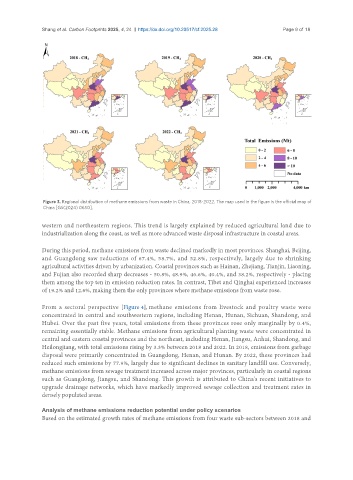
                Figure 3. Regional distribution of methane emissions from waste in China, 2018-2022. The map used in the figure is the official map of
                China [GS(2024) 0650].


               western and northeastern regions. This trend is largely explained by reduced agricultural land due to
               industrialization along the coast, as well as more advanced waste disposal infrastructure in coastal areas.


               During this period, methane emissions from waste declined markedly in most provinces. Shanghai, Beijing,
               and Guangdong saw reductions of 67.4%, 58.7%, and 52.8%, respectively, largely due to shrinking
               agricultural activities driven by urbanization. Coastal provinces such as Hainan, Zhejiang, Tianjin, Liaoning,
               and Fujian also recorded sharp decreases - 50.8%, 48.9%, 46.6%, 40.4%, and 38.2%, respectively - placing
               them among the top ten in emission reduction rates. In contrast, Tibet and Qinghai experienced increases
               of 19.2% and 12.6%, making them the only provinces where methane emissions from waste rose.


               From a sectoral perspective [Figure 4], methane emissions from livestock and poultry waste were
               concentrated in central and southwestern regions, including Henan, Hunan, Sichuan, Shandong, and
               Hubei. Over the past five years, total emissions from these provinces rose only marginally by 0.4%,
               remaining essentially stable. Methane emissions from agricultural planting waste were concentrated in
               central and eastern coastal provinces and the northeast, including Henan, Jiangsu, Anhui, Shandong, and
               Heilongjiang, with total emissions rising by 3.3% between 2018 and 2022. In 2018, emissions from garbage
               disposal were primarily concentrated in Guangdong, Henan, and Hunan. By 2022, these provinces had
               reduced such emissions by 77.9%, largely due to significant declines in sanitary landfill use. Conversely,
               methane emissions from sewage treatment increased across major provinces, particularly in coastal regions
               such as Guangdong, Jiangsu, and Shandong. This growth is attributed to China's recent initiatives to
               upgrade drainage networks, which have markedly improved sewage collection and treatment rates in
               densely populated areas.


               Analysis of methane emissions reduction potential under policy scenarios
               Based on the estimated growth rates of methane emissions from four waste sub-sectors between 2018 and

