


Page 141 - Read Online
P. 141
Page 8 of 18                                                  Wang et al. Cancer Drug Resist. 2026;9:8


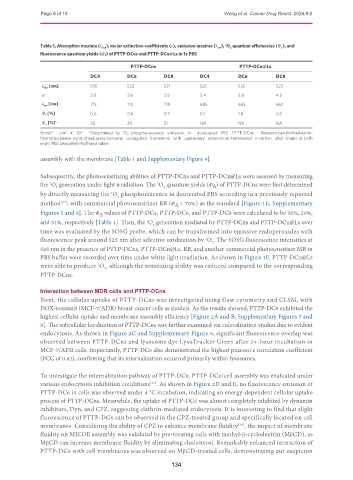
               Table 1. Absorption maxima (λ abs ), molar extinction coefficients (ε), emission maxima (λ em ),  O 2  quantum efficiencies (Φ Δ ), and
                                                                             1
               fluorescence quantum yields (Φ F ) of PTTP-DCns and PTTP-DCn@Ls in 1x PBS
                                             PTTP-DCns                            PTTP-DCn@Ls

                               DC4          DC6         DC8         DC4          DC6          DC8
               λ abs  [nm]     518          522         521         522          525          523
               ε a             3.0          3.6         3.5         3.4          3.8          4.0
               λ em  [nm]      713          712         719         685          683          662
               Φ F  [%]        0.6          0.6         0.7         1.3          1.8          3.8
               Φ Δ  [%] b      30           29          31          NA           NA           NA

                                            1
                  -1
                            4
                               b
               a L·mol · cm -1   ×  10 .  Determined  by O 2 phosphorescence  emission  in  deuterated  PBS.  PTTP-DCns : Benzene-pyridothiadiazole-

               thienothiophene-pyridothiadiazole-benzene  conjugated  framework  with  quaternary  ammonium-terminated  n-carbon alkyl chains  at  both
               ends; PBS: phosphate-buffered saline.
               assembly with the membrane [Table 1 and Supplementary Figure 4].
               Subsequently, the photosensitizing abilities of PTTP-DCns and PTTP-DCn@Ls were assessed by measuring
               the  O  generation under light irradiation. The  O  quantum yields (Φ ) of PTTP-DCns were first determined
                                                      1
                  1
                                                                         Δ
                                                        2
                    2
               by directly measuring the  O  phosphorescence in deuterated PBS according to a previously reported
                                      1
                                         2
               method , with commercial photosensitizer RB (Φ  ≈ 76%) as the standard [Figure 1E, Supplementary
                      [27]
                                                            Δ
               Figures 5 and 6]. The Φ  values of PTTP-DC4, PTTP-DC6, and PTTP-DC8 were calculated to be 30%, 29%,
                                   Δ
               and 31%, respectively [Table 1]. Then, the  O  generation mediated by PTTP-DCns and PTTP-DCn@Ls over
                                                  1
                                                     2
               time was evaluated by the SOSG probe, which can be transformed into emissive endoperoxides with
               fluorescence peak around 525 nm after selective oxidization by  O . The SOSG fluorescence intensities at
                                                                      1
                                                                        2
               525 nm in the presence of PTTP-DCns, PTTP-DCn@Ls, RB, and another commercial photosensitizer MB in
               PBS buffer were recorded over time under white light irradiation. As shown in Figure 1F, PTTP-DCn@Ls
               were able to produce  O , although the sensitizing ability was reduced compared to the corresponding
                                  1
                                    2
               PTTP-DCns.
               Interaction between MDR cells and PTTP-DCns
               Next, the cellular uptake of PTTP-DCns was investigated using flow cytometry and CLSM, with
               DOX-resistant (MCF-7/ADR) breast cancer cells as models. As the results showed, PTTP-DC6 exhibited the
               highest cellular uptake and membrane assembly efficiency [Figure 2A and B, Supplementary Figures 7 and
               8]. The subcellular localization of PTTP-DCns was further examined via colocalization studies due to evident
               endocytosis. As shown in Figure 2C and Supplementary Figure 9, significant fluorescence overlap was
               observed between PTTP-DCns and lysosome dye LysoTracker Green after 24-hour incubation in
               MCF-7/ADR cells. Importantly, PTTP-DC6 also demonstrated the highest pearson’s correlation coefficient
               (PCC of 0.82), confirming that its internalization occurred primarily within lysosomes.


               To investigate the internalization pathway of PTTP-DC6, PTTP-DC6/cell assembly was evaluated under
               various endocytosis inhibition conditions . As shown in Figure 2D and E, no fluorescence emission of
                                                    [33]
               PTTP-DC6 in cells was observed under 4 °C incubation, indicating an energy-dependent cellular uptake
               process of PTTP-DCns. Meanwhile, the uptake of PTTP-DC6 was almost completely inhibited by dynamin
               inhibitors, Dyn, and CPZ, suggesting clathrin-mediated endocytosis. It is interesting to find that slight
               fluorescence of PTTP-DC6 can be observed in the CPZ-treated group and specifically located on cell
               membranes. Considering the ability of CPZ to enhance membrane fluidity , the impact of membrane
                                                                                 [34]
               fluidity on MICOE assembly was validated by pre-treating cells with methyl-β-cyclodextrin (MβCD), as
               MβCD can increase membrane fluidity by eliminating cholesterol. Remarkably enhanced interaction of
               PTTP-DC6 with cell membranes was observed on MβCD-treated cells, demonstrating our suspicion

                                                           134

