


Page 144 - Read Online
P. 144
Wang et al. Cancer Drug Resist. 2026;9:8                                         Page 11 of 18


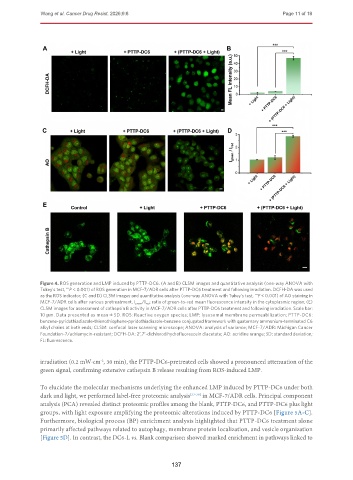
               Figure 4. ROS generation and LMP induced by PTTP-DC6. (A and B) CLSM images and quantitative analysis (one-way ANOVA with
               Tukey’s test,  P < 0.001) of ROS generation in MCF-7/ADR cells after PTTP-DC6 treatment and following irradiation. DCFH-DA was used
                       ***
               as the ROS indicator; (C and D) CLSM images and quantitative analysis (one-way ANOVA with Tukey’s test,  P < 0.001) of AO staining in
                                                                                       ***
               MCF-7/ADR cells after various pretreatment. I green /I red : ratio of green-to-red mean fluorescence intensity in the cytoplasmic region; (E)
               CLSM images for assessment of cathepsin B activity in MCF-7/ADR cells after PTTP-DC6 treatment and following irradiation. Scale bar:
               10 μm. Data presented as mean ± SD. ROS: Reactive oxygen species; LMP: lysosomal membrane permeabilization; PTTP-DC6:
               benzene-pyridothiadiazole-thienothiophene-pyridothiadiazole-benzene conjugated framework with quaternary ammonium-terminated C6
               alkyl chains at both ends; CLSM: confocal laser scanning microscope; ANOVA: analysis of variance; MCF-7/ADR: Michigan Cancer
               Foundation-7/adriamycin-resistant; DCFH-DA: 2′,7′-dichlorodihydrofluorescein diacetate; AO: acridine orange; SD: standard deviation;
               FL: fluorescence.


               irradiation (0.2 mW·cm , 30 min), the PTTP-DC6-pretreated cells showed a pronounced attenuation of the
                                   -2
               green signal, confirming extensive cathepsin B release resulting from ROS-induced LMP.

               To elucidate the molecular mechanisms underlying the enhanced LMP induced by PTTP-DC6 under both
               dark and light, we performed label-free proteomic analysis [37-39]  in MCF-7/ADR cells. Principal component
               analysis (PCA) revealed distinct proteomic profiles among the blank, PTTP-DC6, and PTTP-DC6 plus light
               groups, with light exposure amplifying the proteomic alterations induced by PTTP-DC6 [Figure 5A-C].
               Furthermore, biological process (BP) enrichment analysis highlighted that PTTP-DC6 treatment alone
               primarily affected pathways related to autophagy, membrane protein localization, and vesicle organization
               [Figure 5D]. In contrast, the DC6-L vs. Blank comparison showed marked enrichment in pathways linked to


                                                           137

