


Page 145 - Read Online
P. 145
Page 12 of 18                                                 Wang et al. Cancer Drug Resist. 2026;9:8


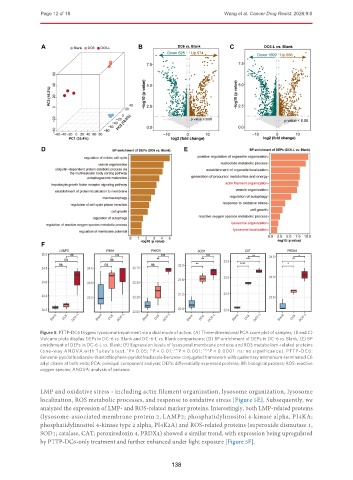
               Figure 5. PTTP-DC6 triggers lysosomal impairment via a dual mode of action. (A) Three-dimensional PCA score plot of samples; (B and C)
               Volcano plots display DEPs in DC-6 vs. Blank and DC-6-L vs. Blank comparisons; (D) BP enrichment of DEPs in DC-6 vs. Blank; (E) BP
               enrichment of DEPs in DC-6-L vs. Blank; (F) Expression levels of lysosomal membrane proteins and ROS metabolism-related proteins
               (one-way ANOVA with Tukey’s test,  P< 0.05;  P < 0.01;   *** P < 0.001;   **** P < 0.0001. ns: no significance). PTTP-DC6:
                                                    **
                                            *
               Benzene-pyridothiadiazole-thienothiophene-pyridothiadiazole-benzene conjugated framework with quaternary ammonium-terminated C6
               alkyl chains at both ends; PCA: principal component analysis; DEPs: differentially expressed proteins; BP: biological process; ROS: reactive
               oxygen species; ANOVA: analysis of variance.

               LMP and oxidative stress - including actin filament organization, lysosome organization, lysosome
               localization, ROS metabolic processes, and response to oxidative stress [Figure 5E]. Subsequently, we
               analyzed the expression of LMP- and ROS-related marker proteins. Interestingly, both LMP-related proteins
               (lysosome-associated membrane protein 2, LAMP2; phosphatidylinositol 4-kinase alpha, PI4KA;
               phosphatidylinositol 4-kinase type 2 alpha, PI4K2A) and ROS-related proteins (superoxide dismutase 1,
               SOD1; catalase, CAT; peroxiredoxin 4, PRDX4) showed a similar trend, with expression being upregulated
               by PTTP-DC6-only treatment and further enhanced under light exposure [Figure 5F].


                                                           138

