


Page 19 - Read Online
P. 19
Page 12 of 20                  Nappi et al. Vessel Plus 2021;5:40  https://dx.doi.org/10.20517/2574-1209.2021.06


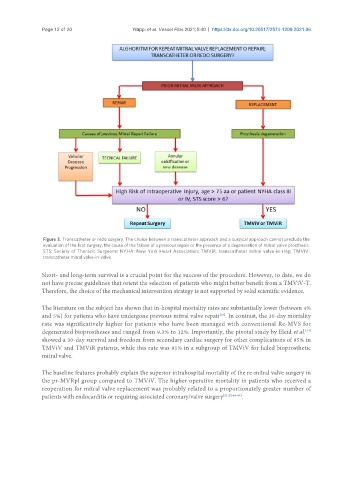
                Figure 3. Transcatheter or redo surgery. The choice between a transcatheter approach and a surgical approach cannot preclude the
                evaluation of the first surgery, the cause of the failure of a previous repair or the presence of a degeneration of mitral valve prosthesis.
                STS: Society of Thoracic Surgeons; NYHA: New York Heart Association; TMViR: transcatheter mitral valve-in-ring; TMViV:
                transcatheter mitral valve-in-valve.

               Short- and long-term survival is a crucial point for the success of the procedure. However, to date, we do
               not have precise guidelines that orient the selection of patients who might better benefit from a TMViV-T.
               Therefore, the choice of the mechanical intervention strategy is not supported by solid scientific evidence.


               The literature on the subject has shown that in-hospital mortality rates are substantially lower (between 4%
                                                                           [16]
               and 5%) for patients who have undergone previous mitral valve repair . In contrast, the 30-day mortality
               rate was significatively higher for patients who have been managed with conventional Re-MVS for
               degenerated bioprostheses and ranged from 9.3% to 12%. Importantly, the pivotal study by Eleid et al.
                                                                                                        [14]
               showed a 30-day survival and freedom from secondary cardiac surgery for other complications of 85% in
               TMViV and TMViR patients, while this rate was 91% in a subgroup of TMViV for failed bioprosthetic
               mitral valve.


               The baseline features probably explain the superior intrahospital mortality of the re-mitral valve surgery in
               the pr-MVRpl group compared to TMViV. The higher operative mortality in patients who received a
               reoperation for mitral valve replacement was probably related to a proportionately greater number of
               patients with endocarditis or requiring associated coronary/valve surgery [21-22,44-45] .

