


Page 18 - Read Online
P. 18
Nappi et al. Vessel Plus 2021;5:40  https://dx.doi.org/10.20517/2574-1209.2021.06  Page 11 of 20


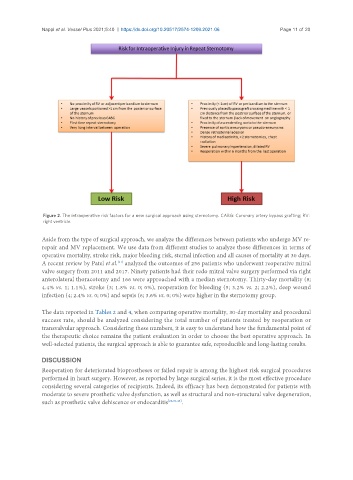
                Figure 2. The intraoperative risk factors for a new surgical approach using sternotomy. CABG: Coronary artery bypass grafting; RV:
                right ventricle.


               Aside from the type of surgical approach, we analyze the differences between patients who undergo MV re-
               repair and MV replacement. We use data from different studies to analyze those differences in terms of
               operative mortality, stroke risk, major bleeding risk, sternal infection and all causes of mortality at 30 days.
                                         [21]
               A recent review by Patel et al.  analyzed the outcomes of 256 patients who underwent reoperative mitral
               valve surgery from 2011 and 2017. Ninety patients had their redo mitral valve surgery performed via right
               anterolateral thoracotomy and 166 were approached with a median sternotomy. Thirty-day mortality (8;
               4.4% vs. 1; 1.1%), stroke (3; 1.8% vs. 0; 0%), reoperation for bleeding (5; 3.2% vs. 2; 2.2%), deep wound
               infection (4; 2.4% vs. 0; 0%) and sepsis (6; 3.6% vs. 0; 0%) were higher in the sternotomy group.


               The data reported in Tables 2 and 4, when comparing operative mortality, 30-day mortality and procedural
               success rate, should be analyzed considering the total number of patients treated by reoperation or
               transvalvular approach. Considering these numbers, it is easy to understand how the fundamental point of
               the therapeutic choice remains the patient evaluation in order to choose the best operative approach. In
               well-selected patients, the surgical approach is able to guarantee safe, reproducible and long-lasting results.

               DISCUSSION
               Reoperation for deteriorated bioprostheses or failed repair is among the highest risk surgical procedures
               performed in heart surgery. However, as reported by large surgical series, it is the most effective procedure
               considering several categories of recipients. Indeed, its efficacy has been demonstrated for patients with
               moderate to severe prosthetic valve dysfunction, as well as structural and non-structural valve degeneration,
               such as prosthetic valve dehiscence or endocarditis [22,31,45] .

