


Page 17 - Read Online
P. 17
Page 10 of 20                  Nappi et al. Vessel Plus 2021;5:40  https://dx.doi.org/10.20517/2574-1209.2021.06


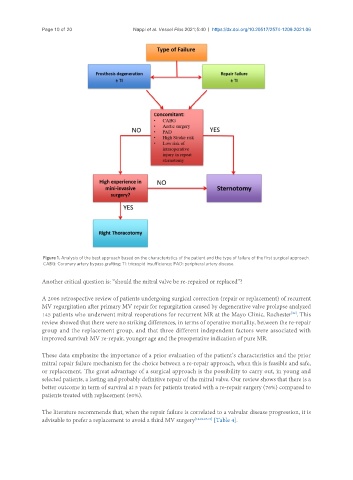
                Figure 1. Analysis of the best approach based on the characteristics of the patient and the type of failure of the first surgical approach.
                CABG: Coronary artery bypass grafting; TI: tricuspid insufficiency; PAD: peripheral artery disease.

               Another critical question is: “should the mitral valve be re-repaired or replaced”?


               A 2006 retrospective review of patients undergoing surgical correction (repair or replacement) of recurrent
               MV regurgitation after primary MV repair for regurgitation caused by degenerative valve prolapse analyzed
                                                                                                   [22]
               145 patients who underwent mitral reoperations for recurrent MR at the Mayo Clinic, Rochester . This
               review showed that there were no striking differences, in terms of operative mortality, between the re-repair
               group and the replacement group, and that three different independent factors were associated with
               improved survival: MV re-repair, younger age and the preoperative indication of pure MR.


               These data emphasize the importance of a prior evaluation of the patient’s characteristics and the prior
               mitral repair failure mechanism for the choice between a re-repair approach, when this is feasible and safe,
               or replacement. The great advantage of a surgical approach is the possibility to carry out, in young and
               selected patients, a lasting and probably definitive repair of the mitral valve. Our review shows that there is a
               better outcome in term of survival at 5 years for patients treated with a re-repair surgery (76%) compared to
               patients treated with replacement (60%).


               The literature recommends that, when the repair failure is correlated to a valvular disease progression, it is
               advisable to prefer a replacement to avoid a third MV surgery [14,22,25,31]  [Table 4].

