


Page 13 - Read Online
P. 13
Hsu et al. Vessel Plus 2021;5:2  I  http://dx.doi.org/10.20517/2574-1209.2020.45                                                     Page 7 of 12


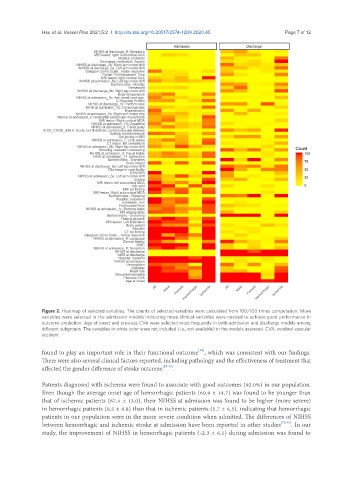
               Figure 2. Heatmap of selected variables. The counts of selected variables were calculated from 100/100 times computation. More
               variables were selected in the admission models indicating more clinical variables were needed to achieve good performance in
               outcome prediction. Age of onset and previous CVA were selected most frequently in both admission and discharge models among
               different subgroups. The variables in white color were not included (i.e., not available) in the models assessed. CVA: cerebral vascular
               accident

                                                                    [28]
               found to play an important role in their functional outcome , which was consistent with our findings.
               There were also several clinical factors reported, including pathology and the effectiveness of treatment that
               affected the gender difference of stroke outcome [29-31] .


               Patients diagnosed with ischemia were found to associate with good outcomes (92.0%) in our population.
               Even though the average onset age of hemorrhagic patients (60.9 ± 14.7) was found to be younger than
               that of ischemic patients (67.4 ± 13.0), their NIHSS at admission was found to be higher (more severe)
               in hemorrhagic patients (8.5 ± 8.8) than that in ischemic patients (5.7 ± 6.5), indicating that hemorrhagic
               patients in our population were in the more severe condition when admitted. The differences of NIHSS
               between hemorrhagic and ischemic stroke at admission have been reported in other studies [32,33] . In our
               study, the improvement of NIHSS in hemorrhagic patients (-2.3 ± 6.1) during admission was found to

