


Page 9 - Read Online
P. 9
Page 4 of 17                    Hong et al. Vessel Plus 2022;6:4  https://dx.doi.org/10.20517/2574-1209.2021.88


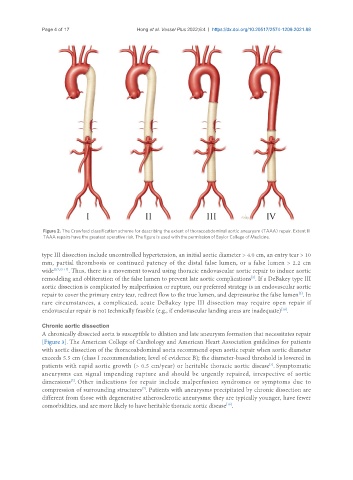
                Figure 2. The Crawford classification scheme for describing the extent of thoracoabdominal aortic aneurysm (TAAA) repair. Extent II
                TAAA repairs have the greatest operative risk. The figure is used with the permission of Baylor College of Medicine.

               type III dissection include uncontrolled hypertension, an initial aortic diameter > 4.0 cm, an entry tear > 10
               mm, partial thrombosis or continued patency of the distal false lumen, or a false lumen > 2.2 cm
               wide [5,7,15-17] . Thus, there is a movement toward using thoracic endovascular aortic repair to induce aortic
                                                                                      [5]
               remodeling and obliteration of the false lumen to prevent late aortic complications . If a DeBakey type III
               aortic dissection is complicated by malperfusion or rupture, our preferred strategy is an endovascular aortic
                                                                                                      [5]
               repair to cover the primary entry tear, redirect flow to the true lumen, and depressurize the false lumen . In
               rare circumstances, a complicated, acute DeBakey type III dissection may require open repair if
               endovascular repair is not technically feasible (e.g., if endovascular landing areas are inadequate) .
                                                                                                [18]

               Chronic aortic dissection
               A chronically dissected aorta is susceptible to dilation and late aneurysm formation that necessitates repair
               [Figure 3]. The American College of Cardiology and American Heart Association guidelines for patients
               with aortic dissection of the thoracoabdominal aorta recommend open aortic repair when aortic diameter
               exceeds 5.5 cm (class I recommendation; level of evidence B); the diameter-based threshold is lowered in
               patients with rapid aortic growth (> 0.5 cm/year) or heritable thoracic aortic disease . Symptomatic
                                                                                            [7]
               aneurysms can signal impending rupture and should be urgently repaired, irrespective of aortic
                         [7]
               dimensions . Other indications for repair include malperfusion syndromes or symptoms due to
               compression of surrounding structures . Patients with aneurysms precipitated by chronic dissection are
                                                 [7]
               different from those with degenerative atherosclerotic aneurysms: they are typically younger, have fewer
               comorbidities, and are more likely to have heritable thoracic aortic disease .
                                                                             [19]

