


Page 8 - Read Online
P. 8
Hong et al. Vessel Plus 2022;6:4  https://dx.doi.org/10.20517/2574-1209.2021.88  Page 3 of 17


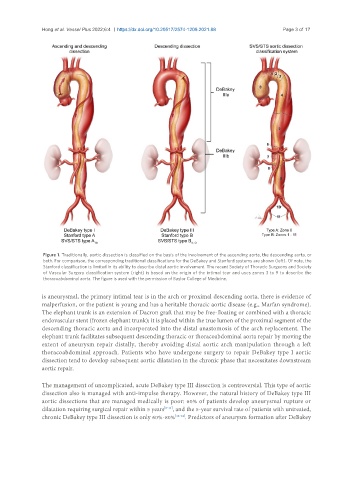
                Figure 1. Traditionally, aortic dissection is classified on the basis of the involvement of the ascending aorta, the descending aorta, or
                both. For comparison, the corresponding traditional classifications for the DeBakey and Stanford systems are shown (left). Of note, the
                Stanford classification is limited in its ability to describe distal aortic involvement. The recent Society of Thoracic Surgeons and Society
                of Vascular Surgery classification system (right) is based on the origin of the intimal tear and uses zones 3 to 9 to describe the
                thoracoabdominal aorta. The figure is used with the permission of Baylor College of Medicine.


               is aneurysmal, the primary intimal tear is in the arch or proximal descending aorta, there is evidence of
               malperfusion, or the patient is young and has a heritable thoracic aortic disease (e.g., Marfan syndrome).
               The elephant trunk is an extension of Dacron graft that may be free-floating or combined with a thoracic
               endovascular stent (frozen elephant trunk); it is placed within the true lumen of the proximal segment of the
               descending thoracic aorta and incorporated into the distal anastomosis of the arch replacement. The
               elephant trunk facilitates subsequent descending thoracic or thoracoabdominal aorta repair by moving the
               extent of aneurysm repair distally, thereby avoiding distal aortic arch manipulation through a left
               thoracoabdominal approach. Patients who have undergone surgery to repair DeBakey type I aortic
               dissection tend to develop subsequent aortic dilatation in the chronic phase that necessitates downstream
               aortic repair.

               The management of uncomplicated, acute DeBakey type III dissection is controversial. This type of aortic
               dissection also is managed with anti-impulse therapy. However, the natural history of DeBakey type III
               aortic dissections that are managed medically is poor: 60% of patients develop aneurysmal rupture or
               dilatation requiring surgical repair within 5 years [8-11] , and the 5-year survival rate of patients with untreated,
               chronic DeBakey type III dissection is only 60%-80% [12-14] . Predictors of aneurysm formation after DeBakey

