


Page 176 - Read Online
P. 176
Wang et al. Soft Sci. 2026, 6, 8                                                 Page 19 of 28


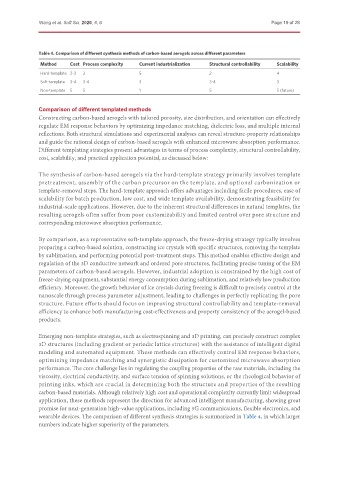
               Table 4. Comparison of different synthesis methods of carbon-based aerogels across different parameters
               Method     Cost Process complexity  Current industrialization  Structural controllability  Scalability

               Hard-template 2-3  2               5                        2                      4
               Soft-template  3-4  3-4            3                        3-4                    3
               Non-template  5  5                 1                        5                      5 (future)


               Comparison of different templated methods
               Constructing carbon-based aerogels with tailored porosity, size distribution, and orientation can effectively
               regulate EM response behaviors by optimizing impedance matching, dielectric loss, and multiple internal
               reflections. Both structural simulations and experimental analyses can reveal structure-property relationships
               and guide the rational design of carbon-based aerogels with enhanced microwave absorption performance.
               Different templating strategies present advantages in terms of process complexity, structural controllability,
               cost, scalability, and practical application potential, as discussed below:

               The synthesis of carbon-based aerogels via the hard-template strategy primarily involves template
               pretreatment, assembly of the carbon precursor on the template, and optional carbonization or
               template-removal steps. The hard-template approach offers advantages including facile procedures, ease of
               scalability for batch production, low cost, and wide template availability, demonstrating feasibility for
               industrial-scale applications. However, due to the inherent structural differences in natural templates, the
               resulting aerogels often suffer from poor customizability and limited control over pore structure and
               corresponding microwave absorption performance.

               By comparison, as a representative soft-template approach, the freeze-drying strategy typically involves
               preparing a carbon-based solution, constructing ice crystals with specific structures, removing the template
               by sublimation, and performing potential post-treatment steps. This method enables effective design and
               regulation of the 3D conductive network and ordered pore structures, facilitating precise tuning of the EM
               parameters of carbon-based aerogels. However, industrial adoption is constrained by the high cost of
               freeze-drying equipment, substantial energy consumption during sublimation, and relatively low production
               efficiency. Moreover, the growth behavior of ice crystals during freezing is difficult to precisely control at the
               nanoscale through process parameter adjustment, leading to challenges in perfectly replicating the pore
               structure. Future efforts should focus on improving structural controllability and template-removal
               efficiency to enhance both manufacturing cost-effectiveness and property consistency of the aerogel-based
               products.


               Emerging non-template strategies, such as electrospinning and 3D printing, can precisely construct complex
               3D structures (including gradient or periodic lattice structures) with the assistance of intelligent digital
               modeling and automated equipment. These methods can effectively control EM response behaviors,
               optimizing impedance matching and synergistic dissipation for customized microwave absorption
               performance. The core challenge lies in regulating the coupling properties of the raw materials, including the
               viscosity, electrical conductivity, and surface tension of spinning solutions, or the rheological behavior of
               printing inks, which are crucial in determining both the structure and properties of the resulting
               carbon-based materials. Although relatively high cost and operational complexity currently limit widespread
               application, these methods represent the direction for advanced intelligent manufacturing, showing great
               promise for next-generation high-value applications, including 5G communications, flexible electronics, and
               wearable devices. The comparison of different synthesis strategies is summarized in Table 4, in which larger
               numbers indicate higher superiority of the parameters.

