


Page 172 - Read Online
P. 172
Wang et al. Soft Sci. 2026, 6, 8                                                 Page 15 of 28


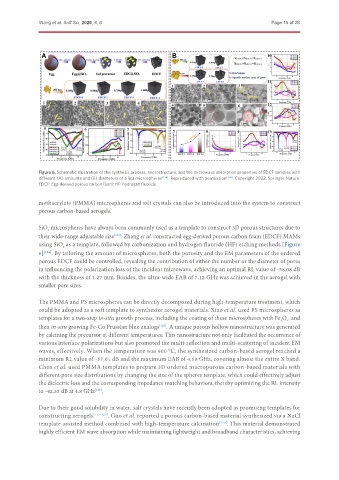
               Figure 6. Schematic illustration of the synthesis process, microstructure, and the microwave absorption properties of EDCF samples with
               different (A) amounts and (B) diameters of silica microspheres [124] . Reproduced with permission [124] . Copyright 2022, Springer Nature.
               EDCF: Egg-derived porous carbon foam; HF: hydrogen fluoride.

               methacrylate (PMMA) microspheres and salt crystals can also be introduced into the system to construct
               porous carbon-based aerogels.


               SiO  microspheres have always been commonly used as a template to construct 3D porous structures due to
                  2
               their wide-range adjustable size . Zhang et al. constructed egg-derived porous carbon foam (EDCF) MAMs
                                         [123]
               using SiO  as a template, followed by carbonization and hydrogen fluoride (HF) etching methods [Figure
                       2
               6] [124] . By tailoring the amount of microspheres, both the porosity and the EM parameters of the ordered
               porous EDCF could be controlled, revealing the contribution of either the number or the diameter of pores
               in influencing the polarization loss of the incident microwave, achieving an optimal RL value of -58.08 dB
               with the thickness of 1.27 mm. Besides, the ultra-wide EAB of 7.12 GHz was achieved in the aerogel with
               smaller pore sizes.

               The PMMA and PS microspheres can be directly decomposed during high-temperature treatment, which
               could be adopted as a soft template to synthesize aerogel materials. Xiao et al. used PS microspheres as
               templates for a two-step in-situ growth process, including the coating of these microspheres with Fe O , and
                                                                                                      4
                                                                                                    3
               then in-situ growing Fe-Co Prussian blue analogs . A unique porous hollow nanostructure was generated
                                                         [125]
               by calcining the precursor at different temperatures. This nanostructure not only facilitated the occurrence of
               various interface polarizations but also promoted the multi-reflection and multi-scattering of incident EM
               waves, effectively. When the temperature was 600 °C, the synthesized carbon-based aerogel reached a
               minimum RL value of -57.01 dB and the maximum EAB of 4.58 GHz, covering almost the entire X band.
               Chen et al. used PMMA templates to prepare 3D ordered macroporous carbon-based materials with
               different pore size distributions by changing the size of the spheres template, which could effectively adjust
               the dielectric loss and the corresponding impedance matching behaviors, thereby optimizing the RL intensity
               to -42.33 dB at 4.8 GHz .
                                  [126]
               Due to their good solubility in water, salt crystals have recently been adopted as promising templates for
               constructing aerogels [127-129] . Guo et al. reported a porous carbon-based material synthesized via a NaCl
               template-assisted method combined with high-temperature calcination [130] . This material demonstrated
               highly efficient EM wave absorption while maintaining lightweight and broadband characteristics, achieving

