


Page 160 - Read Online
P. 160
Wang et al. Soft Sci. 2026, 6, 8                                                  Page 3 of 28


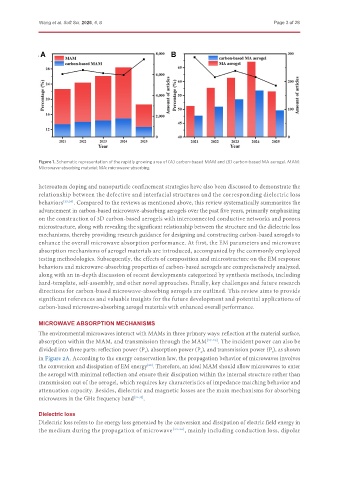
               Figure 1. Schematic representation of the rapidly growing area of (A) carbon-based MAM and (B) carbon-based MA aerogel. MAM:
               Microwave-absorbing material; MA: microwave-absorbing.


               heteroatom doping and nanoparticle confinement strategies have also been discussed to demonstrate the
               relationship between the defective and interfacial structures and the corresponding dielectric loss
               behaviors [25,26] . Compared to the reviews as mentioned above, this review systematically summarizes the
               advancement in carbon-based microwave-absorbing aerogels over the past five years, primarily emphasizing
               on the construction of 3D carbon-based aerogels with interconnected conductive networks and porous
               microstructure, along with revealing the significant relationship between the structure and the dielectric loss
               mechanisms, thereby providing research guidance for designing and constructing carbon-based aerogels to
               enhance the overall microwave absorption performance. At first, the EM parameters and microwave
               absorption mechanisms of aerogel materials are introduced, accompanied by the commonly employed
               testing methodologies. Subsequently, the effects of composition and microstructure on the EM response
               behaviors and microwave-absorbing properties of carbon-based aerogels are comprehensively analyzed,
               along with an in-depth discussion of recent developments categorized by synthesis methods, including
               hard-template, self-assembly, and other novel approaches. Finally, key challenges and future research
               directions for carbon-based microwave-absorbing aerogels are outlined. This review aims to provide
               significant references and valuable insights for the future development and potential applications of
               carbon-based microwave-absorbing aerogel materials with enhanced overall performance.


               MICROWAVE ABSORPTION MECHANISMS
               The environmental microwaves interact with MAMs in three primary ways: reflection at the material surface,
               absorption within the MAM, and transmission through the MAM [27-29] . The incident power can also be
               divided into three parts: reflection power (P ), absorption power (P ), and transmission power (P), as shown
                                                                                                 t
                                                    r
                                                                       a
               in Figure 2A. According to the energy conservation law, the propagation behavior of microwaves involves
               the conversion and dissipation of EM energy . Therefore, an ideal MAM should allow microwaves to enter
                                                     [30]
               the aerogel with minimal reflection and ensure their dissipation within the internal structure rather than
               transmission out of the aerogel, which requires key characteristics of impedance matching behavior and
               attenuation capacity. Besides, dielectric and magnetic losses are the main mechanisms for absorbing
               microwaves in the GHz frequency band [31-33] .


               Dielectric loss
               Dielectric loss refers to the energy loss generated by the conversion and dissipation of electric field energy in
               the medium during the propagation of microwave [34-36] , mainly including conduction loss, dipolar

