


Page 149 - Read Online
P. 149
Ding et al. Soft Sci. 2026, 6, 2                                                  Page 7 of 15


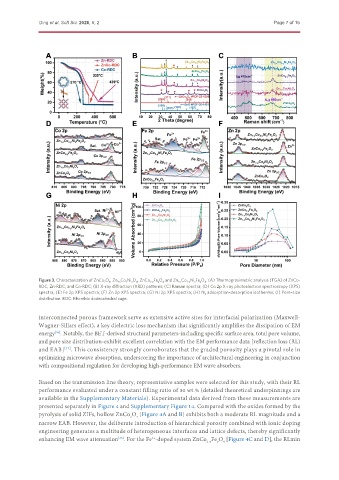
               Figure 3. Characterization of ZnCo 2 O 4 , Zn 1-x Co 2 Ni x O 4 , ZnCo 2-y Fe y O 4  and Zn 1-x Co 2-y Ni x Fe y O 4 . (A) Thermogravimetric analysis (TGA) of ZnCo-
               RDC, Zn-RDC, and Co-RDC; (B) X-ray diffraction (XRD) patterns; (C) Raman spectra; (D) Co 2p X-ray photoelectron spectroscopy (XPS)
               spectra; (E) Fe 2p XPS spectra; (F) Zn 2p XPS spectra; (G) Ni 2p XPS spectra; (H) N 2  adsorption-desorption isotherms; (I) Pore-size
               distribution. RDC: Rhombic dodecahedral cage.

               interconnected porous framework serve as extensive active sites for interfacial polarization (Maxwell-
               Wagner-Sillars effect), a key dielectric loss mechanism that significantly amplifies the dissipation of EM
               energy . Notably, the BET-derived structural parameters-including specific surface area, total pore volume,
                    [36]
               and pore size distribution-exhibit excellent correlation with the EM performance data [reflection loss (RL)
               and EAB] . This consistency strongly corroborates that the graded porosity plays a pivotal role in
                        [37]
               optimizing microwave absorption, underscoring the importance of architectural engineering in conjunction
               with compositional regulation for developing high-performance EM wave absorbers.


               Based on the transmission line theory, representative samples were selected for this study, with their RL
               performance evaluated under a constant filling ratio of 30 wt.% (detailed theoretical underpinnings are
               available in the Supplementary Materials). Experimental data derived from these measurements are
               presented separately in Figure 4 and Supplementary Figure 14. Compared with the oxides formed by the
               pyrolysis of solid ZIFs, hollow ZnCo O  [Figure 4A and B] exhibits both a moderate RL magnitude and a
                                               2
                                                 4
               narrow EAB. However, the deliberate introduction of hierarchical porosity combined with ionic doping
               engineering generates a multitude of heterogeneous interfaces and lattice defects, thereby significantly
               enhancing EM wave attenuation . For the Fe -doped system ZnCo Fe O  [Figure 4C and D], the RLmin
                                                      3+
                                           [38]
                                                                             y
                                                                               4
                                                                          2-y

