


Page 67 - Read Online
P. 67
Page 10 of 21                             Liu et al. Soft Sci 2024;4:44  https://dx.doi.org/10.20517/ss.2024.59


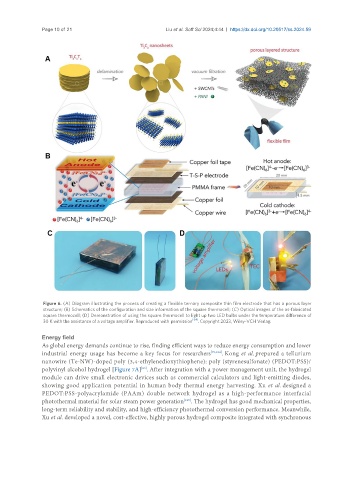
                Figure 6. (A) Diagram illustrating the process of creating a flexible ternary composite thin film electrode that has a porous layer
                structure; (B) Schematics of the configuration and size information of the square thermocell; (C) Optical images of the as-fabricated
                square thermocell; (D) Demonstration of using the square thermocell to light up two LED bulbs under the temperature difference of
                                                                  [64]
                30 K with the assistance of a voltage amplifier. Reproduced with permission  . Copyright 2023, Wiley-VCH Verlag.
               Energy field
               As global energy demands continue to rise, finding efficient ways to reduce energy consumption and lower
               industrial energy usage has become a key focus for researchers [79,124] . Kong et al. prepared a tellurium
               nanowire (Te-NW)-doped poly (3,4-ethylenedioxythiophene): poly (styrenesulfonate) (PEDOT:PSS)/
               polyvinyl alcohol hydrogel [Figure 7A] . After integration with a power management unit, the hydrogel
                                                 [83]
               module can drive small electronic devices such as commercial calculators and light-emitting diodes,
               showing good application potential in human body thermal energy harvesting. Xu et al. designed a
               PEDOT:PSS-polyacrylamide (PAAm) double network hydrogel as a high-performance interfacial
                                                               [125]
               photothermal material for solar steam power generation . The hydrogel has good mechanical properties,
               long-term reliability and stability, and high-efficiency photothermal conversion performance. Meanwhile,
               Xu et al. developed a novel, cost-effective, highly porous hydrogel composite integrated with synchronous

