


Page 93 - Read Online
P. 93
Page 4 of 21                           Tang et al. Soft Sci. 2025, 5, 11  https://dx.doi.org/10.20517/ss.2024.62


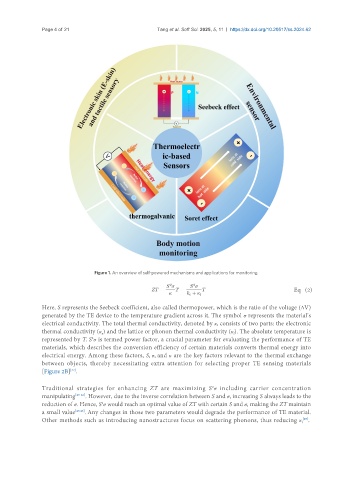
                                 Figure 1. An overview of self-powered mechanisms and applications for monitoring.

                                                                                                    Eq   (2)


               Here, S represents the Seebeck coefficient, also called thermopower, which is the ratio of the voltage (ΔV)
               generated by the TE device to the temperature gradient across it. The symbol σ represents the material’s
               electrical conductivity. The total thermal conductivity, denoted by κ, consists of two parts: the electronic
               thermal conductivity (κ ) and the lattice or phonon thermal conductivity (κ). The absolute temperature is
                                   e
                                                                                l
               represented by T. S σ is termed power factor, a crucial parameter for evaluating the performance of TE
                                2
               materials, which describes the conversion efficiency of certain materials converts thermal energy into
               electrical energy. Among these factors, S, σ, and κ are the key factors relevant to the thermal exchange
               between objects, thereby necessitating extra attention for selecting proper TE sensing materials
               [Figure 2B] .
                         [42]

               Traditional  strategies  for  enhancing  ZT  are  maximizing  S σ  including  carrier  concentration
                                                                         2
               manipulating [43-46] . However, due to the inverse correlation between S and σ, increasing S always leads to the
               reduction of σ. Hence, S σ would reach an optimal value of ZT with certain S and σ, making the ZT maintain
                                   2
               a small value [47,48] . Any changes in those two parameters would degrade the performance of TE material.
                                                                                                       [49]
               Other methods such as introducing nanostructures focus on scattering phonons, thus reducing κ .
                                                                                                       l

