


Page 51 - Read Online
P. 51
Wang et al. Soft Sci 2024;4:41  https://dx.doi.org/10.20517/ss.2024.53          Page 33 of 43


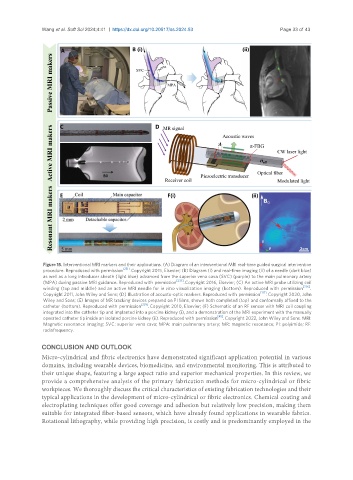
                Figure 15. Interventional MRI markers and their applications. (A) Diagram of an interventional MRI real-time guided surgical intervention
                procedure. Reproduced with permission [231] . Copyright 2015, Elsevier; (B) Diagram (i) and real-time imaging (ii) of a needle (dark blue)
                as well as a long introducer sheath (light blue) advanced from the superior vena cava (SVC) (purple) to the main pulmonary artery
                (MPA) during passive MRI guidance. Reproduced with permission [233] . Copyright 2016, Elsevier; (C) An active MRI probe utilizing coil
                winding (top and middle) and an active MRI needle for in vitro visualization imaging (bottom). Reproduced with  permission [236] .
                Copyright 2011, John Wiley and Sons; (D) Illustration of acousto-optic markers. Reproduced with permission [117] . Copyright 2020, John
                Wiley and Sons; (E) Images of MR tracking devices prepared on PI films, shown both completed (top) and conformally affixed to the
                catheter (bottom). Reproduced with  permission [239] . Copyright 2010, Elsevier; (F) Schematic of an RF sensor with MRI coil coupling
                integrated into the catheter tip and implanted into a porcine kidney (i), and a demonstration of the MRI experiment with the manually
                operated catheter tip inside an isolated porcine kidney (ii). Reproduced with permission [45] . Copyright 2022, John Wiley and Sons. MRI:
                Magnetic resonance imaging; SVC: superior vena cava; MPA: main pulmonary artery; MR: magnetic resonance; PI: polyimide; RF:
                radiofrequency.

               CONCLUSION AND OUTLOOK
               Micro-cylindrical and fibric electronics have demonstrated significant application potential in various
               domains, including wearable devices, biomedicine, and environmental monitoring. This is attributed to
               their unique shape, featuring a large aspect ratio and superior mechanical properties. In this review, we
               provide a comprehensive analysis of the primary fabrication methods for micro-cylindrical or fibric
               workpieces. We thoroughly discuss the critical characteristics of existing fabrication technologies and their
               typical applications in the development of micro-cylindrical or fibric electronics. Chemical coating and
               electroplating techniques offer good coverage and adhesion but relatively low precision, making them
               suitable for integrated fiber-based sensors, which have already found applications in wearable fabrics.
               Rotational lithography, while providing high precision, is costly and is predominantly employed in the

