


Page 152 - Read Online
P. 152
Wang et al. Soft Sci. 2025, 5, 28  https://dx.doi.org/10.20517/ss.2025.11                                                   Page 3 of 29

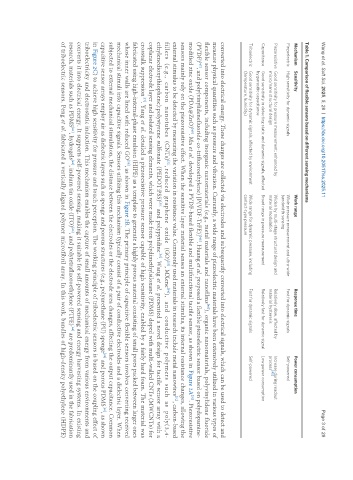
               Table 1. Comparison of flexible sensors based on different sensing mechanisms
                Mechanism  Sensitivity                            Work range                      Response time          Power consumption
                Piezoelectric High sensitivity for dynamic signals  Wide pressure measurement and ultra-wide   Fast for dynamic signals  Self-powered
                                                                  bandwidth sensing
                Piezoresistive Good sensitivity for pressure measurement; enhanced by   Widen by multi-stage structural design and   Relatively slow, affected by   Increase during readout
                                                                                                                              [45]
                         micro/nano structural design             material modulation             material hysteresis    process
                Capacitance  Good sensitivity in detecting static and dynamic signals, affected  Broad range in pressure measurement  Relatively fast for dynamic signal  Low power consumption
                         by parasitic capacitance
                Triboelectric Good sensitivity for dynamic signals, affected by environment   Wide range for dynamic pressure, including   Fast for dynamic signals  Self-powered
                         (temperature, humidity)                  contact-type pressure


               converted into electrical energy. These charges are collected via electrodes and subsequently converted into electrical signals, which can be used to detect and
               measure physical quantities such as pressure and vibration. Currently, a wide range of piezoelectric materials have been extensively utilized in various types of
               flexible sensor components, including inorganic nanomaterials (e.g., metal materials and nanofilms ), organic nanomaterials, polyvinylidene fluoride
                                                                                                       [46]
               (PVDF) , and poly(vinylidenefluoride-co-trifluoroethylene) [P(VDF-TrFE)] . Huang et al. proposed a flexible piezoelectric sensor based on polydopamine-
                                                                                [48]
                      [47]
               modified zinc oxide (PDA@ZnO) . Ma et al. developed a PVDF-based flexible and multifunctional tactile sensor, as shown in Figure 2A . Piezoresistive
                                                                                                                                      [50]
                                            [49]
               sensors mainly rely on the piezoresistive effect. When the sensitive layer material senses an external stimulus, its internal resistance changes, allowing the
               external stimulus to be detected by measuring the variation in resistance value. Commonly used materials in research include metal nanowires , carbon-based
                                                                                                                                      [51]
               fillers  (e.g.,  carbon  nanotubes  (CNTs) , reduced  graphene  oxide  (GO) , MXene ),  and  conductive  polymers  such  as  poly(3,4-
                                                                                                  [54]
                                                                                         [53]
                                                       [52]
               ethylenedioxythiophene):polystyrene sulfonate (PEDOT:PSS)  and polypyridine . Wang et al. presented a novel design for tactile sensor array with a
                                                                     [55]
                                                                                      [56]
               coplanar electrode layer and isolated sensing elements, which were made from polydimethylsiloxane (PDMS) doped with multi-walled CNTs (MWCNTs) for
               crosstalk suppression . Yang et al. detailed a piezoresistive pressure sensor capable of high sensitivity, enabled by a fairly hard foam. The material was
                                 [57]
               fabricated using high-internal-phase emulsion (HIPE) as a template to generate a highly porous material consisting of small pores packed between larger ones
               whose inner walls are lined with reduced GO , as shown in Figure 2B. The primary principle of capacitive flexible sensors involves converting received
                                                       [58]
               mechanical stimuli into capacitive signals. Sensors utilizing this mechanism typically consist of a pair of conductive electrodes and a dielectric layer. When
               subjected to external mechanical stimulation, the distance between the electrodes or the electrode area changes, affecting the output capacitance. Common
               capacitive sensor arrays employ air as dielectric layers such as sponge and porous structures (e.g., polyurethane (PU) sponge  and porous PDMS , as shown
                                                                                                                        [59]
                                                                                                                                          [60]
               in Figure 2C) to achieve high sensitivity for pressure and touch perception. The working principle of triboelectric sensors is based on the coupling effect of
               triboelectricity and electrostatic induction. This mechanism enables the capture of small amounts of mechanical energy from various environments and
               converts it into electrical energy. It supports self-powered sensing, making it suitable for self-powered sensing and energy harvesting systems. In existing
               research, materials such as PDMS , hydrogels , indium tin oxide (ITO) , and polytetrafluoroethylene (PTFE)  are predominantly used in the fabrication
                                                       [62]
                                                                             [63]
                                                                                                               [64]
                                            [61]
               of triboelectric sensors. Peng et al. fabricated a vertically aligned polymer microfibril array. In this work, bundles of high-density polyethylene (HDPE)

