


Page 100 - Read Online
P. 100
Tang et al. Soft Sci. 2025, 5, 11  https://dx.doi.org/10.20517/ss.2024.62       Page 11 of 21


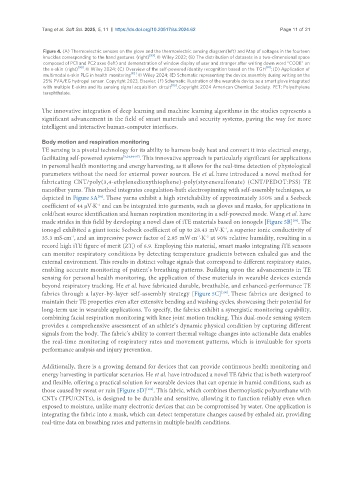
                Figure 4. (A) Thermoelectric sensors on the glove and the thermoelectric sensing diagram(left) and Map of voltages in the fourteen
                knuckles corresponding to the hand gestures  (right) [89] . © Wiley 2022; (B) The distribution of datasets in a two-dimensional space
                composed of PC1 and PC2 axes (left) and demonstration of window display of user and stranger after writing down word “CODE” on
                the e-skin  (right) [90] . © Wiley 2024; (C) Overview of the self-powered identity recognition based on the  TGH [91] ; (D) Application of
                multimodal e-skin PLG in health monitoring [92] . © Wiley 2024; (E) Schematic representing the device assembly during writing on the
                25% PVA/EG hydrogel sensor. Copyright 2023, Elsevier; (F) Schematic illustration of the wearable device as a smart glove integrated
                with multiple E-skins and its sensing signal acquisition  circuit [85] . Copyright 2024 American Chemical Society. PET: Polyethylene
                terephthalate.

               The innovative integration of deep learning and machine learning algorithms in the studies represents a
               significant advancement in the field of smart materials and security systems, paving the way for more
               intelligent and interactive human-computer interfaces.

               Body motion and respiration monitoring
               TE sensing is a pivotal technology for its ability to harness body heat and convert it into electrical energy,
               facilitating self-powered systems [9,24,94-97] . This innovative approach is particularly significant for applications
               in personal health monitoring and energy harvesting, as it allows for the real-time detection of physiological
               parameters without the need for external power sources. He et al. have introduced a novel method for
               fabricating CNT/poly(3,4-ethylenedioxythiophene)-poly(styrenesulfonate) (CNT/PEDOT:PSS) TE
               nanofiber yarns. This method integrates coagulation-bath electrospinning with self-assembly techniques, as
                                  [98]
               depicted in Figure 5A . These yarns exhibit a high stretchability of approximately 350% and a Seebeck
               coefficient of 44 μV·K  and can be integrated into garments, such as gloves and masks, for applications in
                                  -1
               cold/heat source identification and human respiration monitoring in a self-powered mode. Wang et al. have
                                                                                                    [99]
               made strides in this field by developing a novel class of iTE materials based on ionogels [Figure 5B] . The
               ionogel exhibited a giant ionic Seebeck coefficient of up to 28.43 mV·K , a superior ionic conductivity of
                                                                             -1
                                                                      -2
                                                                   -1
               35.3 mS·cm , and an impressive power factor of 2.85 mW·m ·K  at 90% relative humidity, resulting in a
                         -1
               record high iTE figure of merit (ZT) of 6.9. Employing this material, smart masks integrating iTE sensors
                                              i
               can monitor respiratory conditions by detecting temperature gradients between exhaled gas and the
               external environment. This results in distinct voltage signals that correspond to different respiratory states,
               enabling accurate monitoring of patient’s breathing patterns. Building upon the advancements in TE
               sensing for personal health monitoring, the application of these materials in wearable devices extends
               beyond respiratory tracking. He et al. have fabricated durable, breathable, and enhanced-performance TE
               fabrics through a layer-by-layer self-assembly strategy [Figure 5C] . These fabrics are designed to
                                                                            [100]
               maintain their TE properties even after extensive bending and washing cycles, showcasing their potential for
               long-term use in wearable applications. To specify, the fabrics exhibit a synergistic monitoring capability,
               combining facial respiration monitoring with knee joint motion tracking. This dual-mode sensing system
               provides a comprehensive assessment of an athlete’s dynamic physical condition by capturing different
               signals from the body. The fabric’s ability to convert thermal voltage changes into actionable data enables
               the real-time monitoring of respiratory rates and movement patterns, which is invaluable for sports
               performance analysis and injury prevention.

               Additionally, there is a growing demand for devices that can provide continuous health monitoring and
               energy harvesting in particular scenarios. He et al. have introduced a novel TE fabric that is both waterproof
               and flexible, offering a practical solution for wearable devices that can operate in humid conditions, such as
               those caused by sweat or rain [Figure 5D] . This fabric, which combines thermoplastic polyurethane with
                                                  [101]
               CNTs (TPU/CNTs), is designed to be durable and sensitive, allowing it to function reliably even when
               exposed to moisture, unlike many electronic devices that can be compromised by water. One application is
               integrating the fabric into a mask, which can detect temperature changes caused by exhaled air, providing
               real-time data on breathing rates and patterns in multiple health conditions.

