


Page 29 - Read Online
P. 29
Page 16 of 38                            Zhu et al. Soft Sci 2024;4:17  https://dx.doi.org/10.20517/ss.2024.05


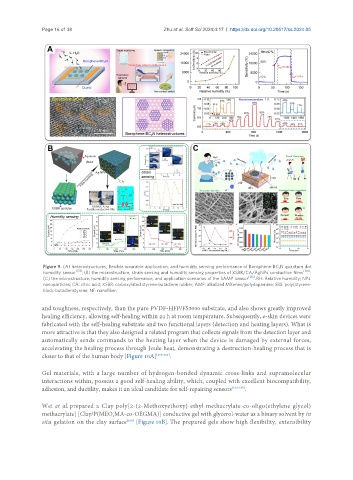
                Figure 9. (A) heterostructures, flexible wearable application, and humidity sensing performance of Borophene-BC N quantum dot
                                                                                               2
                           [133]                                                                       [134]
                humidity  sensor  ; (B) the microstructure, strain sensing and humidity sensing properties of XSBR/CA/AgNPs conductive  films  ;
                                                                                     [135]
                (C) the microstructure, humidity sensing performance, and application scenarios of the SAMP  sensor  . RH: Relative humidity; NPs:
                nanoparticles; CA: citric acid; XSBR: carboxylated styrene-butadiene rubber; AMP: alkalized MXenes/polydopamine; SBS: poly(styrene-
                block-butadienstyrene; NF: nanofiber.
               and toughness, respectively, than the pure PVDF-HFP/FS3000 substrate, and also shows greatly improved
               healing efficiency, allowing self-healing within 24 h at room temperature. Subsequently, e-skin devices were
               fabricated with the self-healing substrate and two functional layers (detection and heating layers). What is
               more attractive is that they also designed a related program that collects signals from the detection layer and
               automatically sends commands to the heating layer when the device is damaged by external forces,
               accelerating the healing process through Joule heat, demonstrating a destruction-healing process that is
               closer to that of the human body [Figure 10A] [159-161] .


               Gel materials, with a large number of hydrogen-bonded dynamic cross-links and supramolecular
               interactions within, possess a good self-healing ability, which, coupled with excellent biocompatibility,
               adhesion, and ductility, makes it an ideal candidate for self-repairing sensors [162-165] .


               Wei et al. prepared a Clay poly[2-(2-Methoxyethoxy) ethyl methacrylate-co-oligo(ethylene glycol)
               methacrylate] [Clay/P(MEO MA-co-OEGMA)] conductive gel with glycerol-water as a binary solvent by in
                                       2
               situ gelation on the clay surface  [Figure 10B]. The prepared gels show high flexibility, extensibility
                                            [160]

